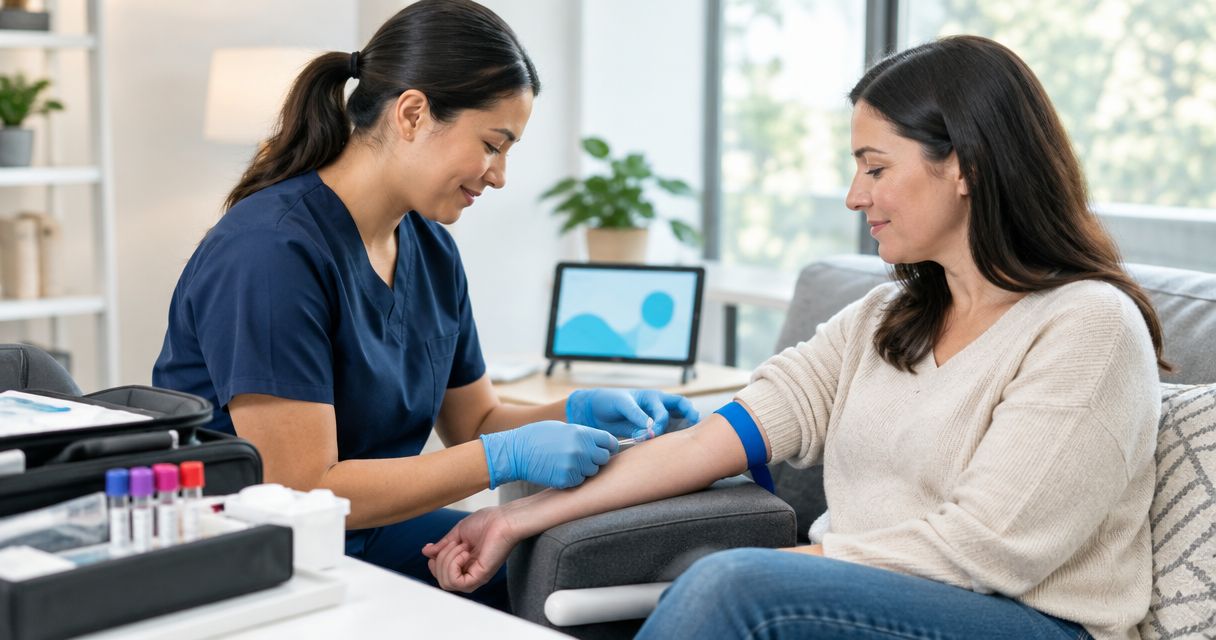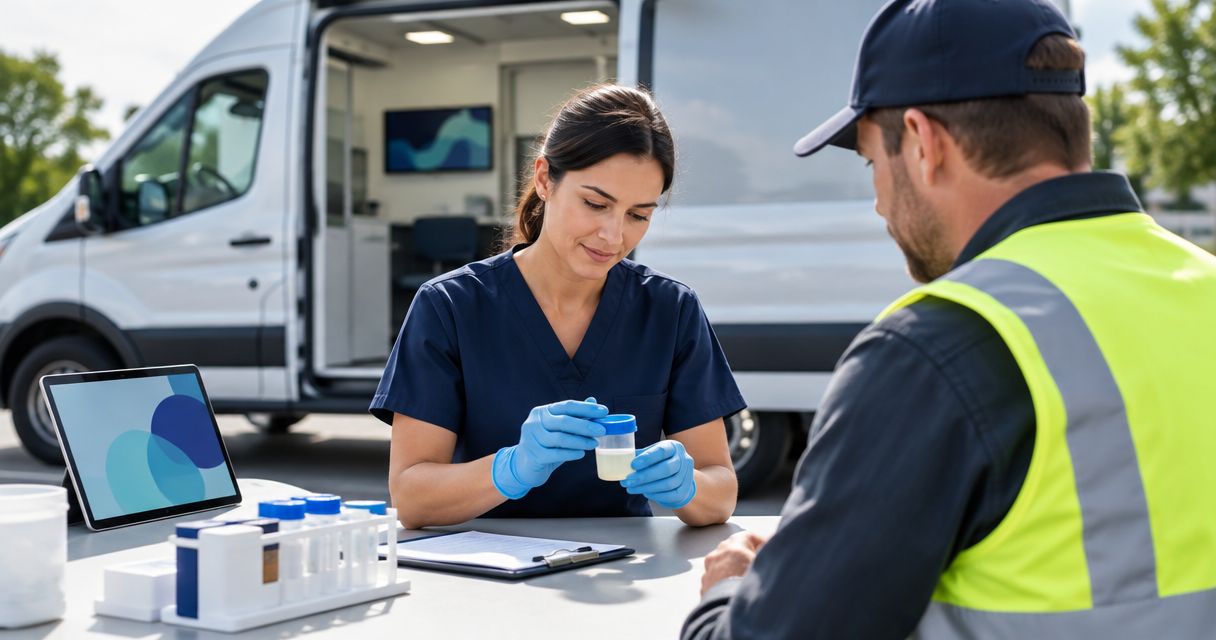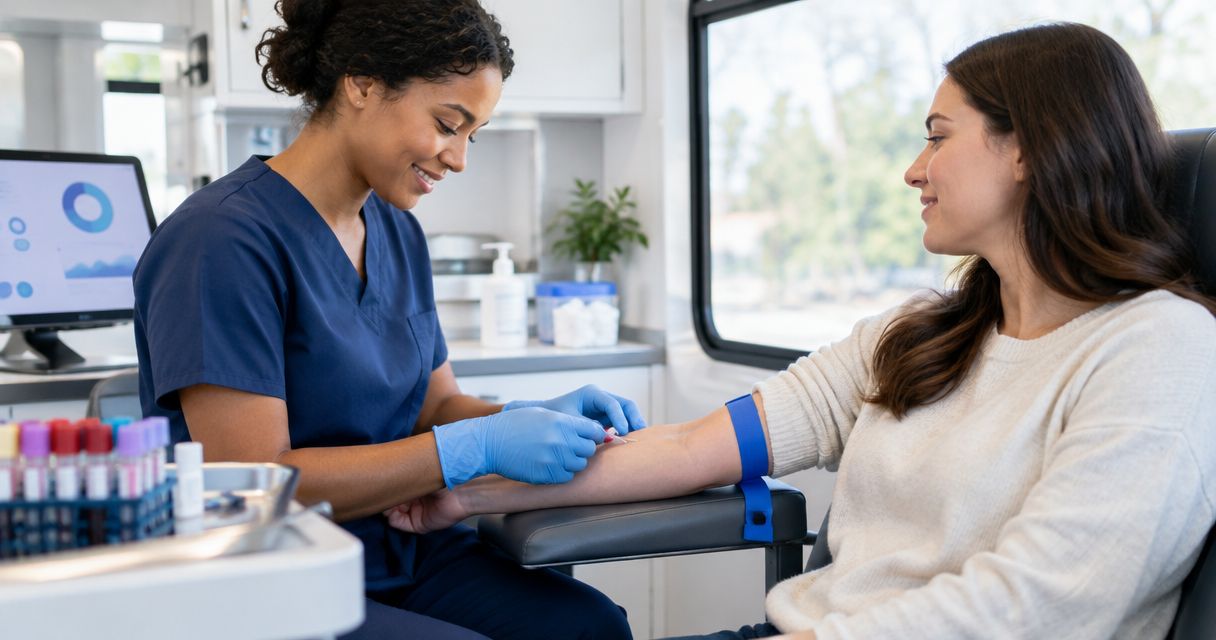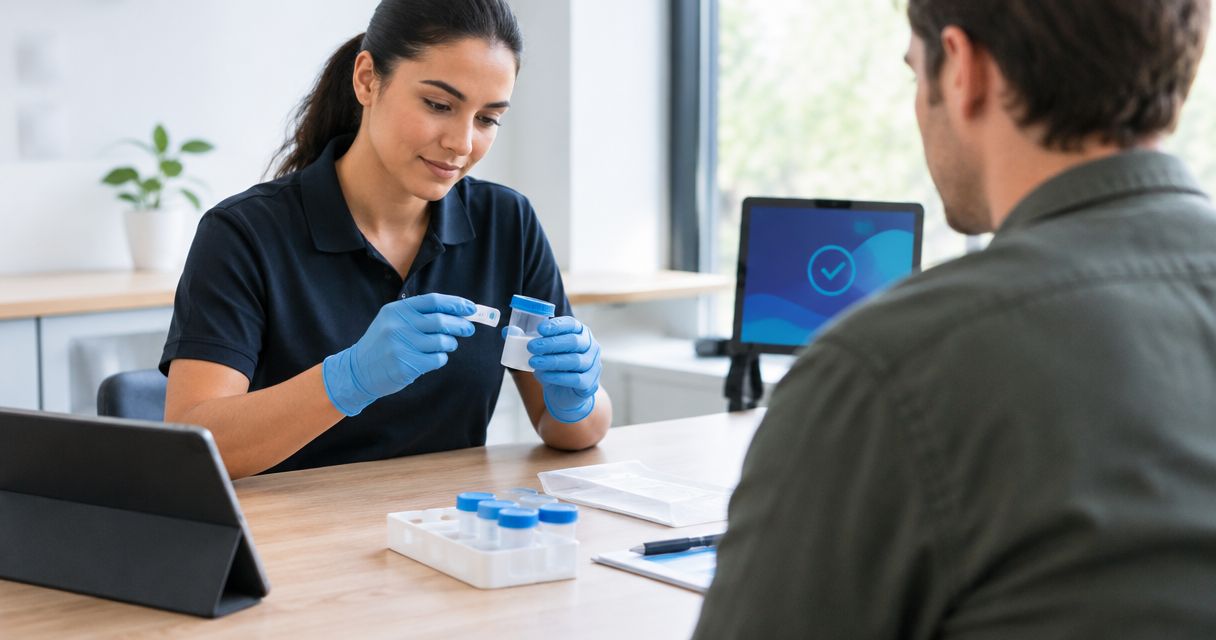
Best for mobile-professional coordination: Fieldflowlab. Best for employer-led clinical oversight: an occupational-health mobile service. Best for an established testing program: a mobile collector working within your laboratory’s process. Best for a hiring event: an on-site collection team. The best mobile drug testing for pre-employment screening in 2026 matches your hiring policy, collection requirements, and receiving laboratory—not just the appointment location.
- Fieldflowlab fits employers seeking credential-checked mobile professionals for pre-employment drug screening; verify the laboratory and reporting arrangements.
- The best mobile drug testing for pre-employment screening matches your policy, chain of custody, and hiring workflow.
- Choose occupational-health oversight when collection must connect with broader pre-employment medical requirements.
- For DOT testing, confirm collector qualifications, authorized specimen procedures, laboratory eligibility, and medical review officer arrangements.
Why this matters
A mobile appointment changes where collection happens. It does not replace the employer’s testing policy, laboratory analysis, or medical review. Treat those as separate responsibilities when you select a service.
Fieldflowlab is an on-demand marketplace connecting U.S. consumers and businesses with credential-checked mobile professionals, including professionals providing drug and alcohol screening. Fieldflowlab mobile drug screening is best suited to employers seeking a marketplace connection to credential-checked mobile professionals. Before booking, establish who manages the specimen after collection and who delivers the hiring decision’s supporting report.
This 2026 guide ranks service models by operational fit rather than naming an unsupported nationwide winner. A marketplace, an occupational-health service, and a collector assigned through your laboratory program solve different problems. Select the model that closes the gap in your existing process.
What makes the best mobile pre-employment drug testing
Assess these criteria before comparing appointment convenience:
- Policy fit: The specimen type, drug panel, and testing procedure must match your written policy and applicable requirements.
- Collector qualifications: Check training for the specific collection procedure. A general professional credential does not establish qualification for every testing program.
- Chain of custody: Identify the collection form, specimen identifiers, sealing procedure, transport arrangements, and handoff records.
- Laboratory and medical review: Name the receiving laboratory and medical review officer, or MRO, when the program requires one. Separate collection from analysis and interpretation.
- Location readiness: Confirm the ZIP code, private collection space, specimen-security arrangements, and access instructions before dispatch.
- Exception handling: Establish who handles insufficient specimens, identity discrepancies, laboratory-reported problems, and recollection instructions.
Do not substitute a credential check for a complete testing workflow. You need evidence that the assigned collector can perform the requested procedure and that the receiving laboratory will accept the specimen under that program.
Mobile testing options at a glance
| Rank and option | Best for | Standout operational role | Key limitation |
|---|---|---|---|
| Fieldflowlab marketplace | Connecting with credential-checked mobile professionals | Marketplace access to professionals offering drug and alcohol screening | Laboratory, MRO, panel, coverage, and reporting arrangements require confirmation |
| Occupational-health mobile service | Employers coordinating testing with medical requirements | Connects collection with an employer-health workflow when included in scope | Mobile collection and additional examinations require separate scope checks |
| Mobile collection within an existing laboratory program | Employers retaining their established testing process | Preserves the employer’s selected laboratory and review arrangements | Collector and laboratory procedures must align before collection |
| On-site hiring-event collection team | Employers organizing applicants at a shared location | Groups collections into an employer-planned event | Requires private space, applicant coordination, and individual specimen controls |
These are service models, not interchangeable testing products. The ranking gives each model a distinct use case; it does not claim that every provider within a model offers the same capabilities.
1. Fieldflowlab: best for mobile-professional coordination
Fieldflowlab connects employers with credential-checked mobile professionals offering drug and alcohol screening. Its stated business model is a marketplace, not a laboratory. Evaluate the assigned professional and downstream testing arrangements separately.
Start with the collection address, applicant instructions, and whether your program is DOT or non-DOT. Then confirm the requested specimen type and panel before the appointment is accepted. For a 2026 hiring workflow, those details belong in the booking requirements rather than an informal conversation after dispatch.
Fieldflowlab pros:
- Its stated service scope includes mobile drug and alcohol screening.
- Its marketplace connects U.S. businesses with mobile professionals.
- Credential checking is part of its stated professional-selection model.
Fieldflowlab cons:
- Marketplace participation alone does not establish qualification for your particular DOT collection procedure.
- Its description does not establish a specific laboratory, MRO arrangement, reporting process, or service ZIP code.
- You must distinguish the marketplace’s responsibilities from those of the collector and laboratory.
Best for: Employers whose immediate need is connecting with a mobile professional, with testing requirements defined before booking.
Verdict: Buy this service model when you need marketplace coordination; hold booking until the collection and reporting responsibilities are clear.
2. Occupational-health mobile service: best for clinical oversight
An occupational-health mobile service is the appropriate model when drug screening belongs within a broader employer-health process. Define whether you need collection alone or coordination with separate examinations and occupational-health decisions. Do not assume that drug testing includes fitness-for-duty evaluation.
Ask the service to identify its clinical responsibilities, laboratory relationship, and reporting boundaries. A drug-test report and a medical clearance answer different questions. Your hiring team needs to know which document it is receiving.
Occupational-health mobile service pros:
- Provides a service model for connecting collection with employer-health requirements.
- Gives you a clinical coordination route when that responsibility is included in the agreement.
- Supports a single defined scope for the medical tasks you actually request.
Occupational-health mobile service cons:
- An occupational-health practice does not automatically offer mobile collection at your address.
- Additional examinations are separate services unless expressly included.
- Clinical scope does not remove the need to verify collection qualifications and laboratory procedures.
Best for: Employers coordinating drug screening with other pre-employment medical requirements.
Verdict: Buy this model when clinical coordination is part of the requirement; skip it as a substitute for a clearly specified collection order.
3. Laboratory-program collection: best for established workflows
A mobile collector working within your existing laboratory program moves collection without redesigning the rest of the process. Your employer-selected laboratory, panel, forms, and MRO arrangements remain the reference points. The collector must follow that program’s instructions.
This model starts with laboratory acceptance, not dispatch. Confirm the required collection kit, specimen identifiers, transport method, and reporting account before arranging the visit. A correctly collected specimen still needs the correct destination and associated order.
Laboratory-program collection pros:
- Keeps the collection aligned with an existing employer testing program.
- Avoids treating a new collection location as a reason to change your selected panel.
- Makes laboratory instructions the basis for specimen preparation and handoff.
Laboratory-program collection cons:
- A mobile collector cannot be assumed compatible with every laboratory program.
- Incorrect forms, kits, or account details create an avoidable mismatch.
- Responsibility for transport and exceptions needs explicit assignment.
Best for: Employers that already have laboratory and review arrangements and need an accepted mobile collection pathway.
Verdict: Buy this model when preserving your existing workflow matters; hold dispatch until the laboratory confirms the collection arrangements.
4. On-site collection team: best for hiring events
An on-site collection team serves applicants at a location organized by the employer. Choose this model when you control the schedule and can prepare an appropriate collection environment. The event must preserve individual identification, privacy, and specimen handling throughout.
Plan the applicant flow before inviting candidates. Registration, identity verification, collection, and specimen handoff should not collapse into an uncontrolled queue. Keep test information away from public sign-in materials.
On-site collection team pros:
- Places collection within an employer-organized hiring event.
- Lets you define applicant arrival instructions around a shared location.
- Supports a planned collection workflow with designated employer contacts.
On-site collection team cons:
- The employer must arrange an appropriate private collection setting.
- Delayed arrivals and collection exceptions need a separate handling plan.
- Group scheduling does not reduce individual chain-of-custody requirements.
Best for: Employers coordinating multiple applicants at a prepared workplace or event location.
Verdict: Buy this model when you control the location and applicant flow; skip it when the site cannot support compliant collection.
DOT screening: confirm the process, not the label
For DOT-regulated testing in 2026, use the U.S. Department of Transportation’s 49 CFR Part 40 procedures and the applicable modal agency’s requirements. A service described as mobile or credential-checked is not automatically qualified for DOT collections. Ask for procedure-specific qualifications and the designated laboratory and MRO arrangements.
DOT urine testing covers 5 drug categories: marijuana, cocaine, amphetamines, opioids, and phencyclidine. Do not assume that a commercially named panel is equivalent merely because its panel count sounds familiar.
Under Part 40’s standard split-specimen urine procedure, the collector needs at least 45 mL of urine, divided into at least 30 mL in the primary bottle and 15 mL in the split bottle. These are DOT urine-collection requirements, not universal specifications for every non-DOT screen or specimen type.
Separate DOT and non-DOT orders at the start. For non-DOT testing, establish the employer’s policy and applicable state or local restrictions before selecting a panel. A provider’s service menu does not determine what your employer is legally permitted to require.
Build the collection order before dispatch
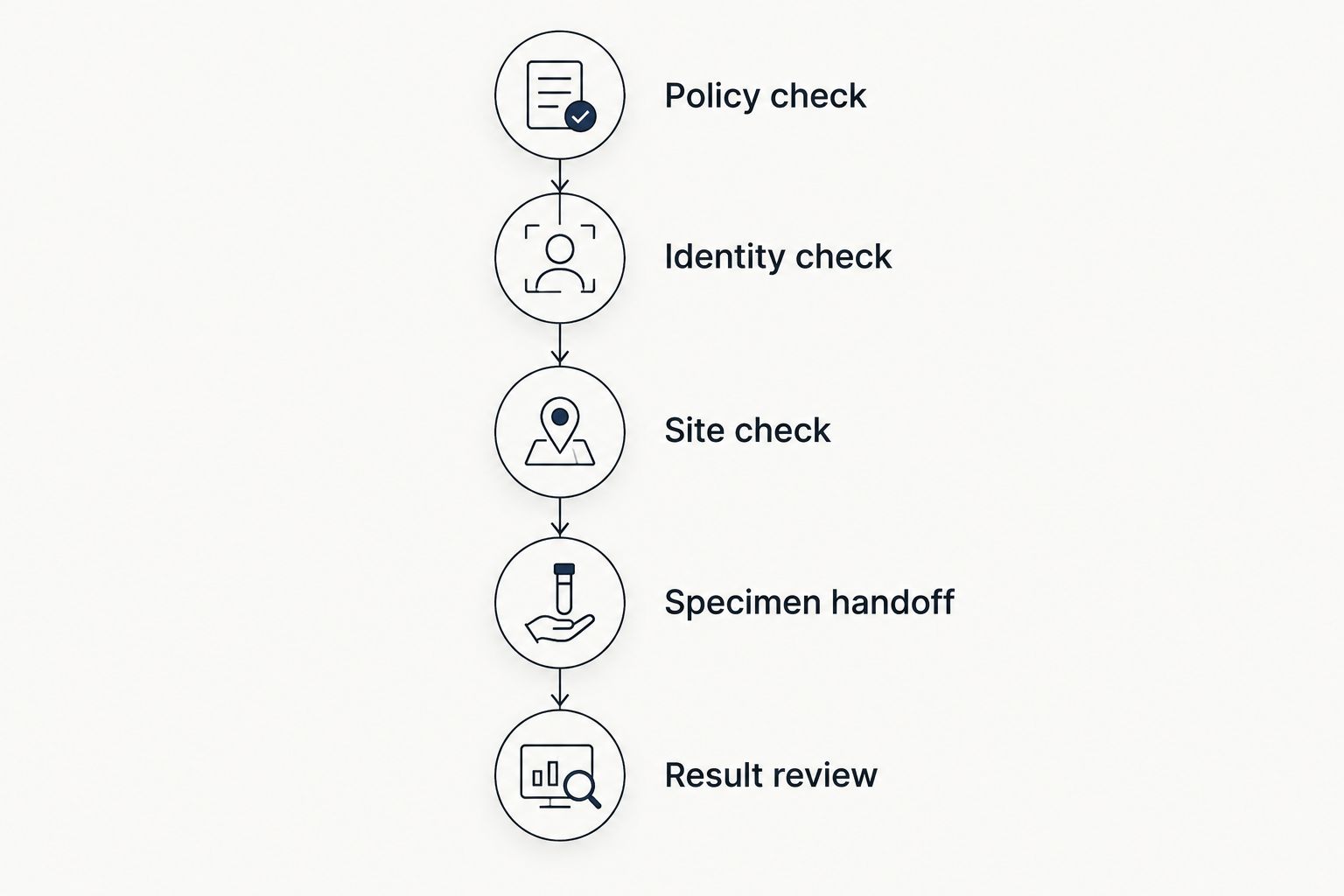
A usable mobile-testing order identifies the applicant, testing purpose, procedure, destination, and accountable contacts. Follow this sequence for your 2026 hiring process:
- Policy check: Establish DOT or non-DOT status, the authorized specimen type, and the requested panel.
- Identity check: Specify the applicant identification process and how discrepancies reach the employer.
- Site check: Confirm the address, ZIP code, privacy arrangements, and collection-space requirements.
- Specimen handoff: Identify forms, laboratory destination, transport responsibilities, and custody documentation.
- Result review: Name the report recipient, MRO arrangement where applicable, and exception contact.
The sequence separates booking from testing authorization. Complete it before the collector travels; dispatch is not the moment to resolve a missing laboratory order.
Give the applicant clear preparation instructions supplied for the specific procedure. Do not improvise instructions about medications, hydration, or specimen collection. Route medical questions to the appropriate qualified professional.
How we ranked these options
The ranking uses policy fit, collector qualifications, chain of custody, laboratory and review arrangements, site readiness, and exception handling. Each model owns a different operational need rather than competing for an unsupported universal first place.
No appointment-speed promise, customer score, or comparative performance claim determines this list. The selection rule is simple: choose the model that supplies the missing responsibility, then verify its scope in writing.
Which mobile testing model should you choose?
Choose a marketplace when the missing piece is a mobile-professional connection. Choose occupational-health coordination when medical oversight is part of the assignment. Keep collection within your laboratory program when that workflow already exists, and use an on-site team when you can prepare the location and applicant schedule.
For an undecided employer, start with the written testing order. A collection provider cannot resolve an undefined panel, unclear regulatory status, or unidentified receiving laboratory simply by arriving at your workplace.
FAQ
What's the best mobile drug testing for pre-employment screening?
The best option is the service model that matches your employer policy and laboratory workflow. Fieldflowlab fits employers seeking connections to credential-checked mobile professionals; occupational-health services fit broader clinical coordination needs.
Does mobile drug testing mean the specimen is analyzed on-site?
No. Mobile collection describes where the specimen is collected, not necessarily where it is analyzed. Confirm whether the order uses laboratory testing or another authorized screening process and who handles result review.
Can I use a mobile collector for DOT pre-employment testing?
A mobile collection must meet applicable DOT collection requirements. Verify procedure-specific collector qualifications, collection-site suitability, custody documentation, laboratory eligibility, and MRO arrangements rather than relying on a mobile-service label.
Is a rapid screening result enough to make a hiring decision?
Do not treat a rapid screening result as interchangeable with the completed testing process required by your policy. Confirm any required laboratory confirmation and medical review before acting on a non-negative screen.
What should I confirm before booking a mobile drug screen?
Confirm DOT or non-DOT status, specimen type, panel, applicant identification, service address, laboratory destination, and result recipient. Assign responsibility for custody records, transport, and collection exceptions before dispatch.
Can every employer use the same pre-employment drug panel?
No. The panel must match the employer's policy and applicable regulatory, state, and local requirements. DOT and non-DOT programs must not be treated as interchangeable.
Is alcohol screening automatically included with a drug test?
No. Define drug testing and alcohol testing separately in the order. Verify the applicable procedure, equipment, and professional qualifications for each requested service.
One last thing
The specimen’s destination matters as much as the collector’s arrival. Before authorizing a 2026 appointment, ask who receives the specimen, who reviews the result, and who contacts you if the collection cannot proceed. Those answers turn a mobile visit into a defined hiring workflow.