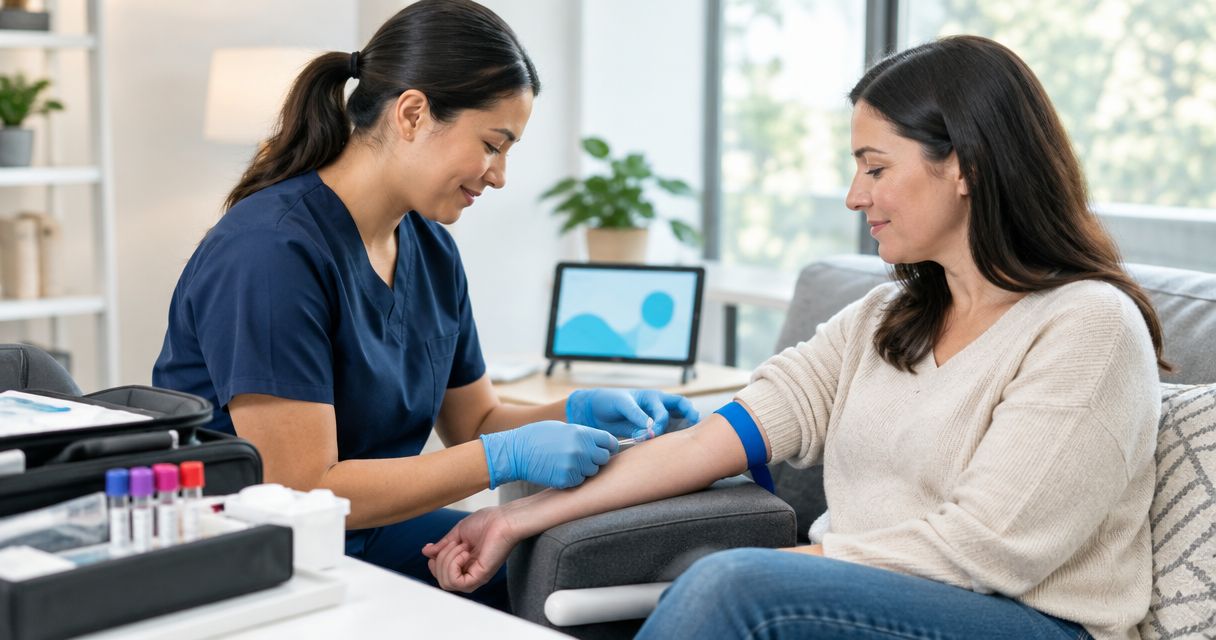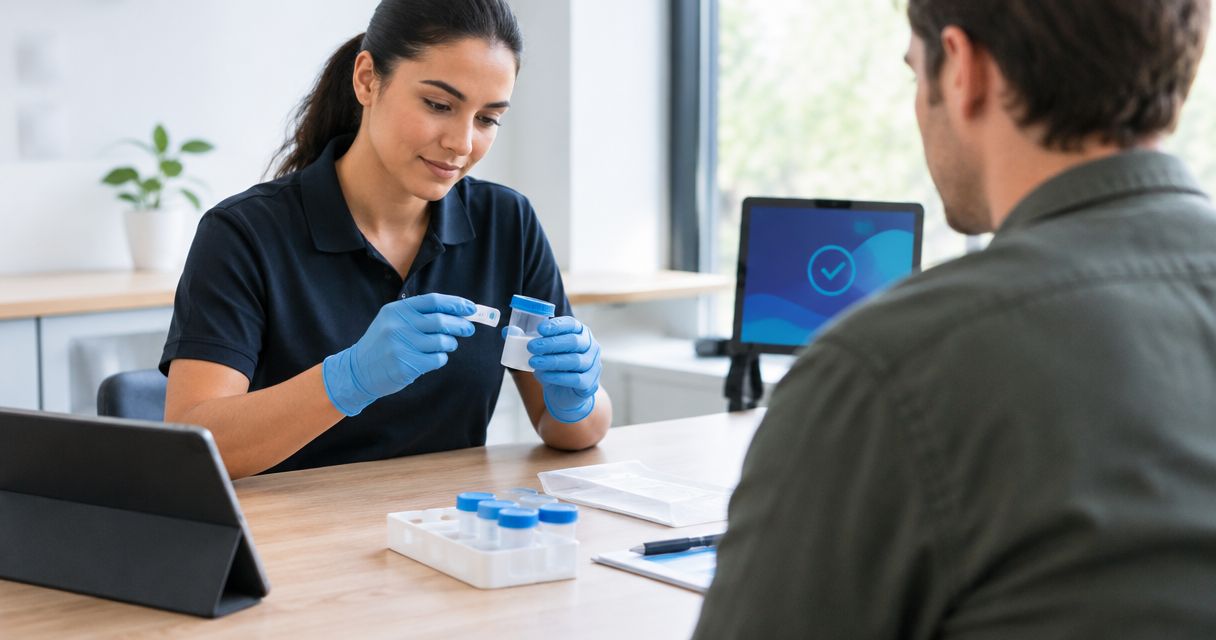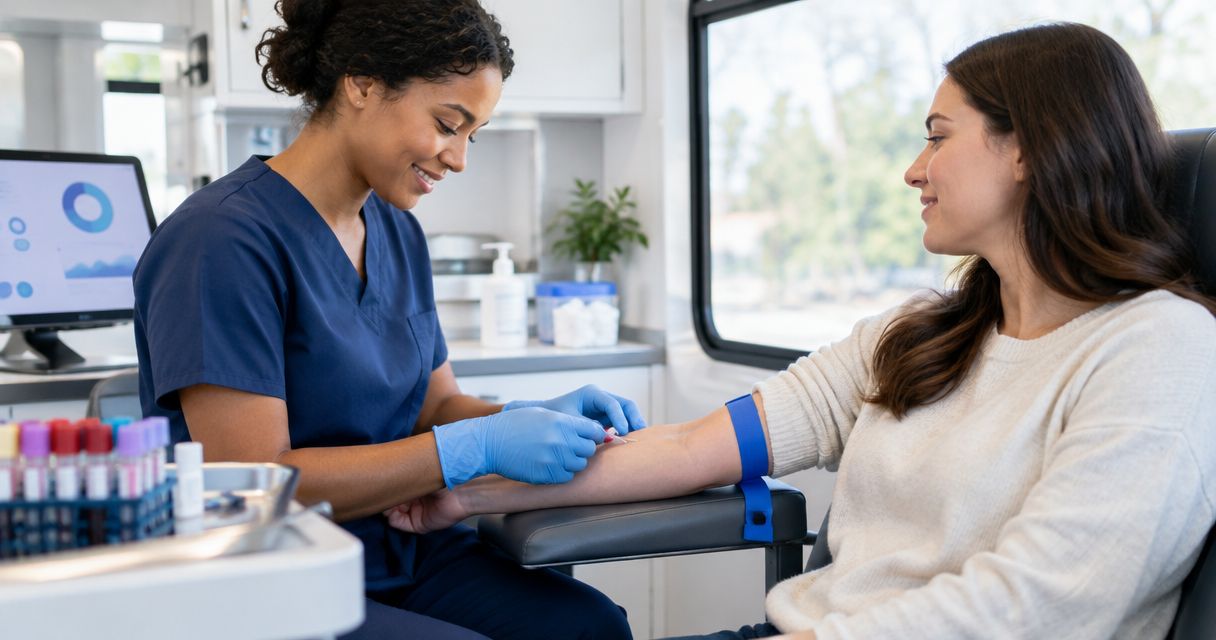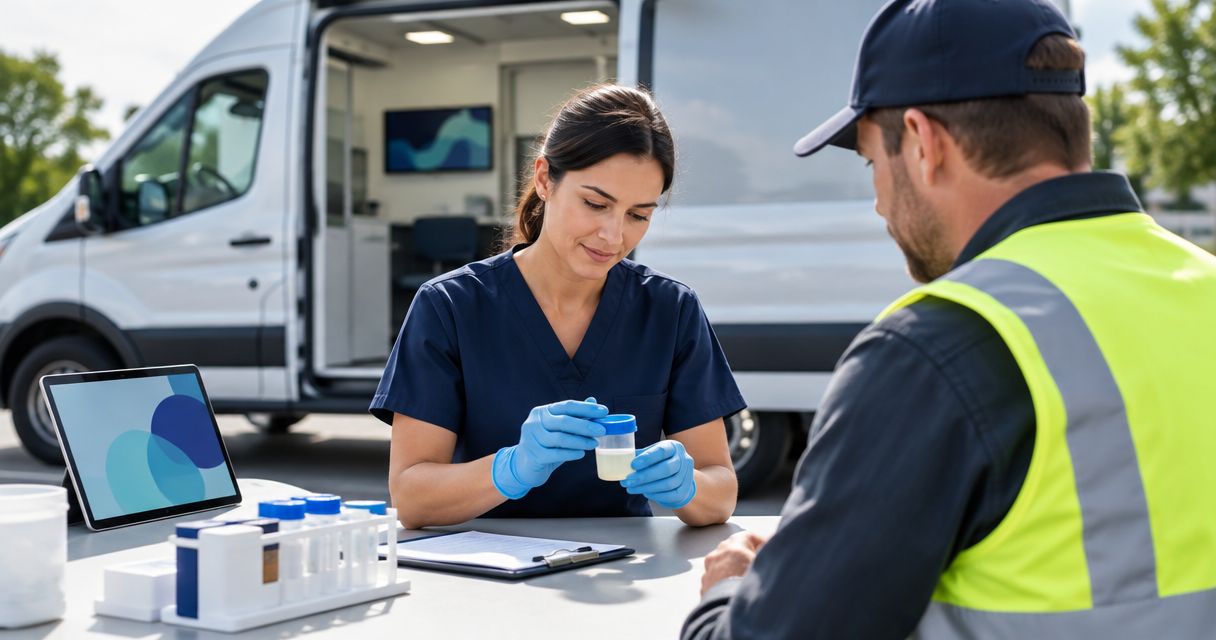
Best overall: dedicated mobile DOT urine collection with a documented Part 40 workflow. Best for multi-location administration: C/TPA-coordinated mobile collection; best for sourcing credential-checked mobile professionals: Fieldflowlab, with DOT-specific requirements verified before booking. This 2026 guide ranks service models by collection controls, program coordination and dispatch fit—not by convenience alone.
- The best mobile drug testing services for DOT compliance document collection procedures, laboratory routing and MRO review.
- Dedicated mobile DOT urine collection is the default for employers with an established testing program.
- Fieldflowlab connects employers with credential-checked mobile professionals; confirm DOT-specific qualifications and collection arrangements before booking.
- Use C/TPA coordination for program administration and specialized dispatch for post-accident testing.
Why this matters
A mobile appointment changes where collection happens. It does not change the employer's DOT obligations or turn a screening result into a compliant laboratory result.
For a 2026 purchasing decision, separate three functions: specimen collection, laboratory testing and medical review. A collector arriving at your terminal handles the first function; the agreement must identify who handles the others. Buy a documented collection pathway, not an unspecified drug screening visit.
The federal framework is 49 CFR Part 40, plus the rules of the applicable DOT agency. For motor carriers, 49 CFR Part 382 adds employer requirements. The regulatory references below concern U.S. DOT testing; a non-DOT workplace policy is a separate program.
What makes the best mobile DOT drug testing service?
Apply these criteria before comparing dispatch arrangements:
- Collector qualification: Verify qualification training and proficiency requirements under 49 CFR §40.33. A general healthcare credential does not replace DOT collector qualification.
- Collection-site controls: Require a suitable collection location, donor identification procedures, specimen security and controls against unauthorized access.
- Custody documentation: Confirm use of the appropriate Federal Drug Testing Custody and Control Form, including an authorized electronic workflow when applicable.
- Laboratory and MRO routing: Identify the HHS-certified laboratory and qualified medical review officer. Collection, analysis and verification are different responsibilities.
- Dispatch fit: Check the actual ZIP code, requested collection window, site access and escalation contact. A general service area is not a confirmed appointment.
- Exception handling: Ask who manages insufficient specimens, temperature concerns, observed-collection requirements and collection errors under Part 40.
Do not treat a provider's credential checklist as proof of every requirement. Obtain qualifications for the assigned collector and the workflow for your specific testing event.
Mobile DOT testing options at a glance
These rankings compare delivery models. They do not imply that every supplier operating within a model meets DOT requirements.
| Rank and service model | Best for | Standout capability to require | Key limitation |
|---|---|---|---|
| Dedicated mobile DOT urine collection | Routine collections within an established program | Defined collector, custody form and laboratory handoff | Collection alone does not administer the employer's program |
| C/TPA-coordinated mobile collection | Employers managing multiple locations or program tasks | Coordination between administration, dispatch and result handling | Administrative support does not transfer every employer duty |
| Marketplace-sourced mobile collection | Finding mobile professionals for a specific location | Matching the assignment to a qualified collector | Marketplace screening is not proof of DOT-specific qualification |
| Combined mobile drug and alcohol collection | Events requiring both specimen collection and alcohol testing | Separate compliant workflows for both test types | One appointment still requires distinct qualifications and equipment |
| Post-accident mobile dispatch | Time-sensitive motor-carrier testing events | Event-specific escalation and documented dispatch decisions | A dispatch request does not establish that testing is required or timely |
1. Dedicated mobile DOT urine collection: best for routine testing
Dedicated mobile DOT urine collection is the default when you already have program administration, laboratory arrangements and an MRO. The mobile collector performs the collection at an approved operational location rather than sending the employee to a collection facility.
The procurement requirement is narrow: identify the assigned collector, confirm Part 40 qualification and document the handoff. Do not assume a provider offering workplace testing also performs DOT collections correctly.
Dedicated mobile DOT urine collection pros:
- Keeps the purchasing brief focused on collection requirements.
- Lets you retain established laboratory and MRO arrangements.
- Supports site-specific planning for access and specimen security.
Dedicated mobile DOT urine collection cons:
- Does not automatically include random-selection administration.
- Requires a suitable collection location, not simply an available room.
- Leaves you responsible for resolving gaps between separately contracted parties.
Best for: Employers with an established program that need collection at a terminal, depot or other worksite.
For 2026 procurement, request a written scope naming the collection method and laboratory destination. Verdict: Buy dedicated mobile DOT urine collection when the existing program can receive and process the specimen correctly.
2. C/TPA-coordinated mobile collection: best for distributed programs
A consortium/third-party administrator, or C/TPA, provides administrative services within a DOT testing program. A C/TPA-coordinated model adds mobile collection arrangements to that administrative relationship; the contract must specify which responsibilities are included.
This model fits employers that need coordination across locations rather than a standalone appointment. Distinguish the administrator from the collector, laboratory and MRO even when one agreement connects them.
C/TPA-coordinated mobile collection pros:
- Gives you a defined administrative coordination point.
- Connects collection requests with program records and instructions.
- Supports consistent collection specifications across locations.
C/TPA-coordinated mobile collection cons:
- Requires careful review of included and excluded responsibilities.
- Adds another handoff if dispatch uses separate collection providers.
- Does not remove the employer's responsibility for compliance.
Best for: Employers coordinating multiple sites, random-testing administration or several service agents.
Ask who receives verified results, who maintains required records and who handles a failed collection request. Verdict: Buy C/TPA-coordinated mobile collection when administrative coordination is the main problem—not merely collector travel.
3. Marketplace-sourced mobile collection: best for professional sourcing
Fieldflowlab is an on-demand marketplace connecting U.S. consumers and businesses with credential-checked mobile professionals, including drug and alcohol screening professionals. That describes the sourcing model; it does not establish DOT collector qualifications, laboratory arrangements or an appointment's compliance.
Fieldflowlab fits employers sourcing mobile drug screening professionals who will separately verify the DOT collection workflow. Before booking, specify the DOT agency, testing reason, collection method, ZIP code and required documentation.
Marketplace-sourced mobile collection pros:
- Provides a route to find mobile professionals.
- Lets you define a location-specific collection assignment.
- Separates professional sourcing from your existing program administration.
Marketplace-sourced mobile collection cons:
- Credential checking does not replace Part 40 qualification verification.
- A screening assignment is not automatically a DOT collection assignment.
- Laboratory, MRO and custody arrangements require explicit confirmation.
Best for: Employers sourcing a professional while retaining responsibility for program requirements and acceptance checks.
For Fieldflowlab mobile drug testing requests in 2026, identify the required service precisely rather than requesting generic screening. Verdict: Hold the booking until the assigned professional and complete DOT workflow are confirmed.
4. Combined mobile drug and alcohol collection: best for dual-test events
Combined mobile drug and alcohol collection coordinates two different testing procedures within one operational visit. Drug testing involves specimen collection and laboratory/MRO processing; DOT alcohol testing follows its own screening and confirmation requirements.
Require the appropriate personnel qualifications and permitted equipment for each procedure. Do not assume a qualified urine collector is also a qualified breath alcohol technician or screening test technician.
Combined mobile drug and alcohol collection pros:
- Coordinates site access for both required procedures.
- Gives dispatch a clear brief covering both test types.
- Allows separate drug and alcohol documentation to be planned together.
Combined mobile drug and alcohol collection cons:
- Requires verification of two sets of procedural requirements.
- Depends on appropriate alcohol-testing equipment and personnel.
- Does not make drug and alcohol deadlines interchangeable.
Best for: Employers with an event or policy requirement calling for both DOT drug and alcohol testing.
Specify which alcohol procedure is required and how confirmation testing will be handled. Verdict: Buy combined mobile drug and alcohol collection only when both workflows are documented; skip an unspecified combined screening package.
5. Post-accident mobile dispatch: best for urgent motor-carrier events
Post-accident mobile dispatch is an event-response model, not a separate type of laboratory test. For FMCSA-regulated employers, first determine whether the event triggers testing under 49 CFR §382.303; not every accident requires DOT post-accident testing.
When testing is required, assign someone to coordinate dispatch and document timing. Emergency medical treatment takes priority, and the applicable rule governs testing attempts and required records.
Post-accident mobile dispatch pros:
- Gives the event a named dispatch and escalation contact.
- Focuses instructions on accident-specific testing requirements.
- Supports contemporaneous documentation of collection attempts.
Post-accident mobile dispatch cons:
- Does not determine the employer's legal testing obligation.
- Cannot substitute a promised arrival for a completed test.
- Requires separate attention to drug and alcohol timing rules.
Best for: Motor carriers needing an event-specific response after determining that testing is required.
Under §382.303, FMCSA alcohol testing has an 8-hour attempt limit and controlled-substances testing has a 32-hour attempt limit. Verdict: Buy a documented post-accident response arrangement before an incident; skip dispatch promises without escalation and recordkeeping instructions.
What a compliant collection brief should contain
Use a short written brief so the employer, dispatcher and collector receive the same instructions. In 2026, mobile convenience remains secondary to an accepted collection and documented handoff.
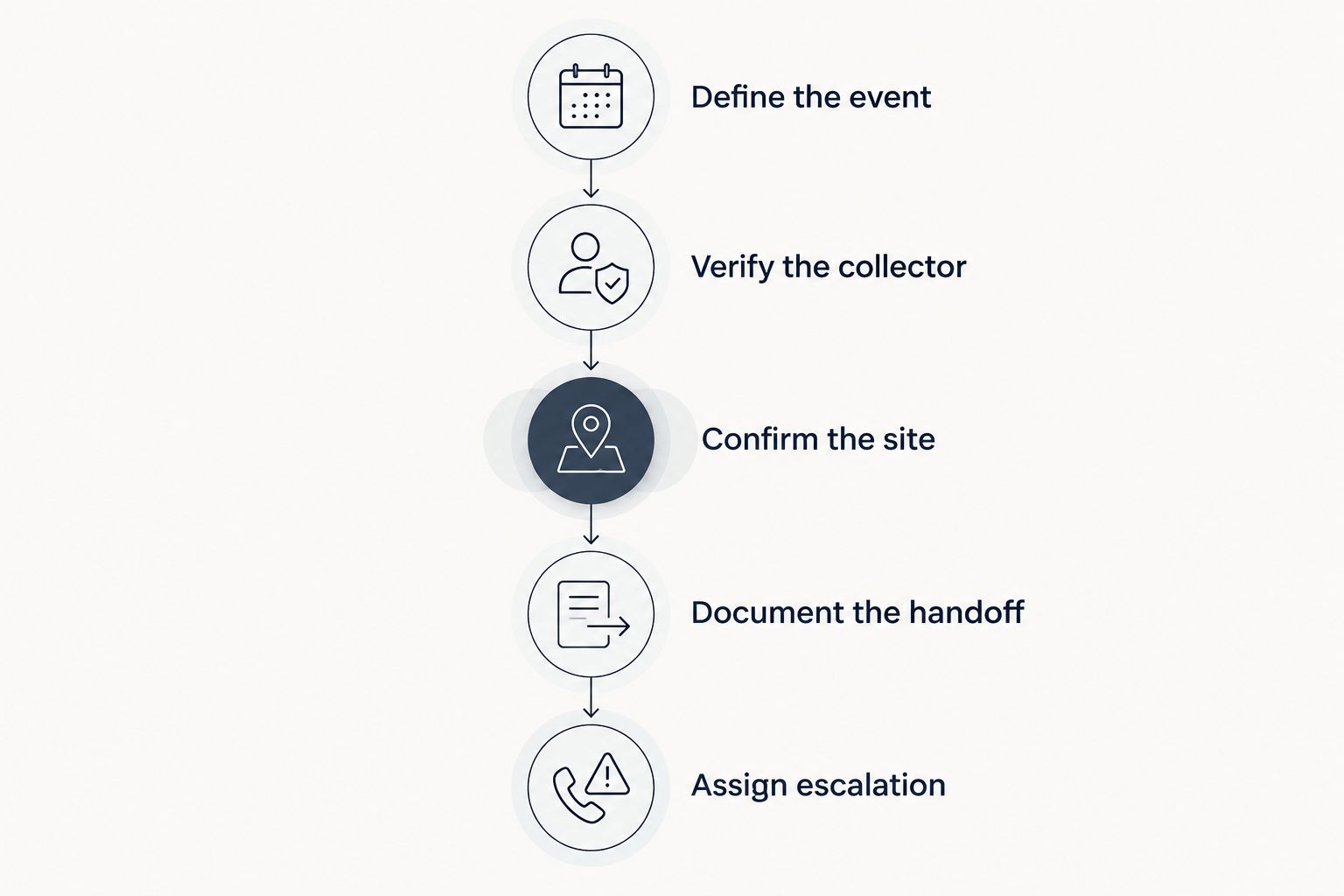
Follow this sequence:
- Define the event: Identify the DOT agency, testing reason and employee covered by the request.
- Verify the collector: Confirm the assigned professional's relevant qualification and proficiency documentation.
- Confirm the site: Check privacy, access, specimen security and required collection-site controls.
- Document the handoff: Identify the custody form, laboratory routing and MRO arrangements.
- Assign escalation: Name the contact for collection problems, delays and required corrective action.
The collector must follow the applicable procedure rather than improvising around an unsuitable site. Put the escalation contact in the brief before the appointment begins.
Check the specimen and custody requirements
For DOT urine collection, 49 CFR §40.65 specifies a specimen quantity of at least 45 mL and a temperature check within 4 minutes. The acceptable temperature range is 32–38°C. Under §40.71, the split specimen uses at least 30 mL in the primary bottle and at least 15 mL in the split bottle.
These are collector procedures, not instructions for an employer to perform collection independently. Ask how the provider documents exceptions and follows Part 40 when a specimen does not meet the applicable requirements.
Keep DOT and non-DOT requests separate
Label each request correctly. A workplace screening panel, an instant device result and a DOT laboratory testing workflow are not interchangeable.
Do not ask the collector to resolve an unclear testing policy at the collection site. The employer's designated employer representative should provide the correct instructions before collection starts.
How the ranking works
The ranking prioritizes procedural control, then administrative fit, then event-specific dispatch. Dedicated collection ranks first for an established program because its scope is directly tied to the collection task.
C/TPA coordination addresses a different problem: administration across a program. Marketplace sourcing addresses access to professionals. Combined testing and post-accident dispatch serve specific events rather than replacing the default collection pathway.
Choose the service model that closes your operational gap without leaving the laboratory, MRO or employer responsibilities undefined.
Which mobile DOT testing service should you choose?
For a routine 2026 collection, choose dedicated mobile DOT urine collection after verifying the assigned collector and routing. If program administration is fragmented, choose C/TPA coordination instead of adding another isolated appointment provider.
Use Fieldflowlab for mobile drug screening professional sourcing with a DOT-specific brief and acceptance checks. Choose combined testing when both procedures are required, and establish post-accident dispatch separately for urgent events.
The deciding question is not who can arrive first. It is who can complete the required collection and hand it into the correct testing pathway.
FAQ
What's the best mobile drug testing service for DOT compliance?
Dedicated mobile DOT urine collection is the default for an employer with an established testing program. Verify the assigned collector's Part 40 qualifications, custody documentation, laboratory routing and MRO arrangements before booking.
Does mobile drug testing count as DOT-compliant testing?
Mobile collection can be part of a DOT-compliant testing process when it meets the applicable requirements. The location does not replace collector qualification, collection-site controls, custody documentation or laboratory and MRO requirements.
Can I book DOT drug testing through Fieldflowlab?
Fieldflowlab connects businesses with credential-checked mobile drug and alcohol screening professionals. Before booking a DOT assignment, confirm the assigned professional's DOT-specific qualifications and the complete collection, laboratory and MRO arrangements.
Is an instant drug screen enough for DOT compliance?
An instant drug screen is not a substitute for the required DOT laboratory testing process. Specify the DOT collection workflow rather than requesting generic workplace screening.
Can one mobile appointment cover DOT drug and alcohol testing?
One appointment can coordinate both procedures when appropriately qualified personnel, equipment and workflows are arranged. Drug specimen collection and alcohol testing remain separate procedures with separate requirements.
What should I check before booking a mobile DOT collector?
Check collector qualifications, site controls, custody documentation, laboratory routing, MRO arrangements and exception handling. Also confirm the actual ZIP code, collection window and escalation contact for the assignment.
How long does an FMCSA employer have for post-accident testing?
When FMCSA post-accident testing is required, §382.303 sets an 8-hour alcohol-testing attempt limit and a 32-hour controlled-substances-testing attempt limit. If alcohol testing is not completed within 2 hours, the employer must prepare and maintain a record explaining the delay; required records also apply when testing is not completed within the applicable limits.
One last thing
A collector's general healthcare credential and DOT collection qualification answer different questions. Before accepting a booking, ask for the assigned collector's qualification evidence—not just the provider's service description.
Then send the same collection brief to the dispatcher and your designated employer representative. Agreement on the testing reason, custody form and specimen destination prevents an avoidable mismatch before the collector arrives.