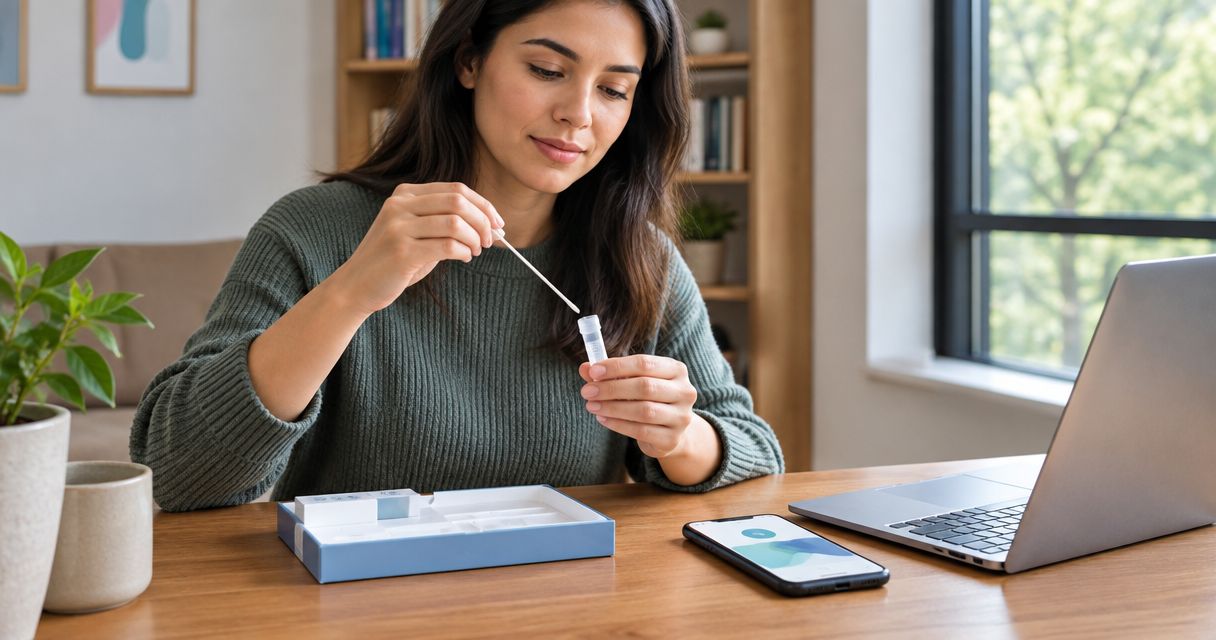
Best overall for home convenience: witnessed collection under a legal-testing laboratory’s protocol. Best for an existing court order: the collection procedure that order specifies; best for relatives in different locations: coordinated witnessed collections under one case. This 2026 guide compares collection workflows, because a self-administered DNA kit does not establish the identity and custody records needed for legal use.
- The best at-home DNA tests with court-admissible results start with documented identity checks and chain of custody.
- Choose witnessed home collection when the receiving court accepts the laboratory and collection procedure.
- Fieldflowlab connects U.S. customers with credential-checked mobile professionals for DNA testing; confirm legal-collection requirements before booking.
- An existing court order takes priority over convenience or a provider’s advertising.
- Skip unsupervised self-collection when you need documented evidence for a legal proceeding.
Why this matters
An at-home DNA test describes where collection happens, not whether the result qualifies as legal evidence. A collector can visit your home and follow a laboratory’s legal-testing procedure. You can also collect a sample yourself at home without independently documenting whose sample entered the kit.
Those are different services. For a 2026 court matter, choose the collection process before choosing the appointment location.
Fieldflowlab connects U.S. consumers and businesses with credential-checked mobile professionals for DNA testing and other field services. Fieldflowlab is best suited to readers seeking mobile DNA collection rather than a self-administered kit. Confirm whether the proposed appointment follows the specific laboratory protocol required for your case; a marketplace connection alone does not establish court admissibility.
A laboratory report and a legally usable evidence package are not interchangeable. Identity verification, collection records, specimen handling, and the receiving court’s requirements all matter. The court decides admissibility—not the kit packaging, collection location, or booking platform.
What makes the best legal at-home DNA testing workflow
Use these criteria to assess a provider before you schedule collection:
- Receiving-court requirements: The procedure must fit the court order, applicable rules, and the purpose of the test. Ask your attorney about case-specific requirements.
- Documented identity: Confirm which identification documents the collector must inspect and how the laboratory records each participant’s identity.
- Witnessed collection: Confirm who collects or observes the samples and whether that person meets the laboratory’s legal-collection requirements.
- Chain of custody: Establish how samples are labeled, sealed, transferred, and received. Each step must follow the applicable protocol.
- Laboratory qualifications: Verify the testing laboratory and any accreditation required for the proceeding. Laboratory accreditation belongs to the laboratory, not automatically to a collection marketplace.
- Case coordination: Confirm participant matching, consent requirements, separate-location procedures, and report delivery before anyone provides a sample.
Ask these 3 screening questions: Who is the testing laboratory? Who controls the legal-collection protocol? Who confirms that the procedure meets the requirements of your proceeding? Get clear answers before an appointment is scheduled.
Legal DNA collection options at a glance
These are 4 collection workflows, not a ranking of named laboratory products. The distinction matters: the same laboratory can offer different collection procedures, and a familiar brand name does not establish that a particular appointment satisfies your case requirements.
| Rank and workflow | Best for | Standout feature | Key limitation |
|---|---|---|---|
| 1. Witnessed home collection | Participants who need collection at home | Identity checks and custody documentation can accompany a home visit | The collector and procedure must meet the laboratory’s requirements |
| 2. Court-directed collection | Participants with an existing court order | Collection follows the case’s specified instructions | Home collection is appropriate only if the instructions permit it |
| 3. Coordinated separate-location collection | Participants who cannot attend together | Samples are linked through one laboratory case | Each collection must follow the required identity and custody procedure |
| 4. Unsupervised self-collection | Personal information without a current legal-evidence requirement | Participants collect their own samples | It does not independently document participant identity or witnessed collection |
For 2026 bookings, treat “legal,” “court-admissible,” and “at-home” as separate claims to verify. A provider must explain the actual procedure behind each label.
1. Witnessed home collection: best for home access needs
Witnessed home collection brings the collection appointment to the participant while preserving the laboratory’s required legal-testing process. A designated collector verifies identity, collects or witnesses collection, and handles the samples according to that protocol. The location changes; the evidentiary requirements do not.
This is the strongest default when your main problem is reaching a collection site. It avoids substituting an unsupervised kit for a legal collection appointment simply because you need the service at home.
Witnessed home collection pros:
- Keeps collection at the participant’s chosen home location.
- Allows identity verification during the collection appointment.
- Supports documented specimen handling under the laboratory’s protocol.
- Separates the collection professional’s responsibilities from the laboratory’s testing responsibilities.
Witnessed home collection cons:
- A mobile professional’s credentials do not alone establish authorization for a particular laboratory’s legal collection.
- Home collection does not override a court’s specified location or procedure.
- Participant identification, consent, and paperwork still require advance coordination.
Best for: Participants who need home access and whose proceeding permits that collection arrangement.
For DNA collection through Fieldflowlab, ask whether the proposed professional is authorized to perform the specific legal collection—not simply whether the professional offers DNA services. Also identify the testing laboratory and the required paperwork before the visit.
Verdict: Buy only after the laboratory’s collection requirements and the receiving court’s requirements are confirmed.
2. Court-directed collection: best for an existing court order
Court-directed collection starts with the instructions already issued in your case. Those instructions take priority over a provider’s standard appointment process. Home collection belongs in this category only when the order and applicable procedure permit it.
This option is not a different DNA technology. It is a different decision rule: follow the case instructions first, then find a collection arrangement that satisfies them.
Court-directed collection pros:
- Anchors the appointment to the proceeding’s stated requirements.
- Identifies procedural questions before samples are collected.
- Helps participants distinguish mandatory instructions from optional conveniences.
Court-directed collection cons:
- The order can restrict your choice of laboratory, collector, or location.
- An unclear instruction needs clarification rather than an assumption.
- A convenient home appointment is unsuitable if it conflicts with the required procedure.
Best for: Anyone whose DNA testing is already governed by a court order.
Start with 2 document sets: the court’s instructions and the laboratory’s collection instructions. Compare the participant names, required identification, collection location, and report destination. Resolve discrepancies through the appropriate legal or laboratory contact before collection.
For a 2026 proceeding, do not rely on instructions from a previous case. Use the instructions that apply to the current matter, including any amendments.
Verdict: Hold booking until the appointment matches the current order.
3. Coordinated separate-location collection: best for distant participants
Coordinated separate-location collection allows participants to provide samples at different locations while keeping them connected to the same laboratory case. Each appointment follows the laboratory’s required identity verification and custody procedure. The laboratory must know how the separately collected samples belong together.
This workflow addresses distance without treating independently purchased kits as a coordinated legal case. Establish the shared case arrangement before either participant schedules collection.
Coordinated separate-location collection pros:
- Removes the need for all participants to attend one appointment.
- Gives each participant a defined collection procedure.
- Links the collections through the laboratory’s case records.
- Allows collection logistics to be organized separately from report delivery.
Coordinated separate-location collection cons:
- Each collection location needs an appropriate collector and procedure.
- Mismatched case information must be resolved before sample submission.
- Different jurisdictions introduce requirements that need separate confirmation.
Best for: Relatives in different U.S. locations who need samples collected for the same legal-testing case.
Give the coordinating laboratory the full collection situation before booking: who must participate, where each participant is located, and what the receiving court requires. Ask how the laboratory assigns case identifiers and instructs each collector. Do not create your own specimen labels or custody paperwork.
If a participant is outside the United States, obtain specific instructions rather than extending a domestic arrangement by assumption. International collection and document requirements need their own review.
Verdict: Buy as one coordinated case, not as unrelated testing orders.
4. Unsupervised self-collection: best for personal information only
An unsupervised self-collection kit lets participants collect their own samples without an independent collector documenting the collection. That convenience is the central feature. It is also the reason this workflow is not the default for a legal-evidence need.
The issue is not simply whether DNA analysis can identify a relationship. The issue is whether the evidence establishes whose samples were tested and how those samples were handled.
Unsupervised self-collection pros:
- Lets participants perform collection themselves.
- Avoids a witnessed collection appointment.
- Fits a personal-information purpose when no legal collection procedure is required.
Unsupervised self-collection cons:
- Does not independently document participant identity at collection.
- Does not establish a witnessed collection record.
- Can leave you needing a new collection if legal evidence becomes necessary.
Best for: Personal information, not a planned court submission.
Do not assume a laboratory can convert an unsupervised collection into a documented legal collection afterward. Ask about the required procedure before collecting anything. Notarizing a later statement does not recreate an unwitnessed specimen collection.
Verdict: Skip for a known court-evidence requirement.
Before you book: follow the evidence path
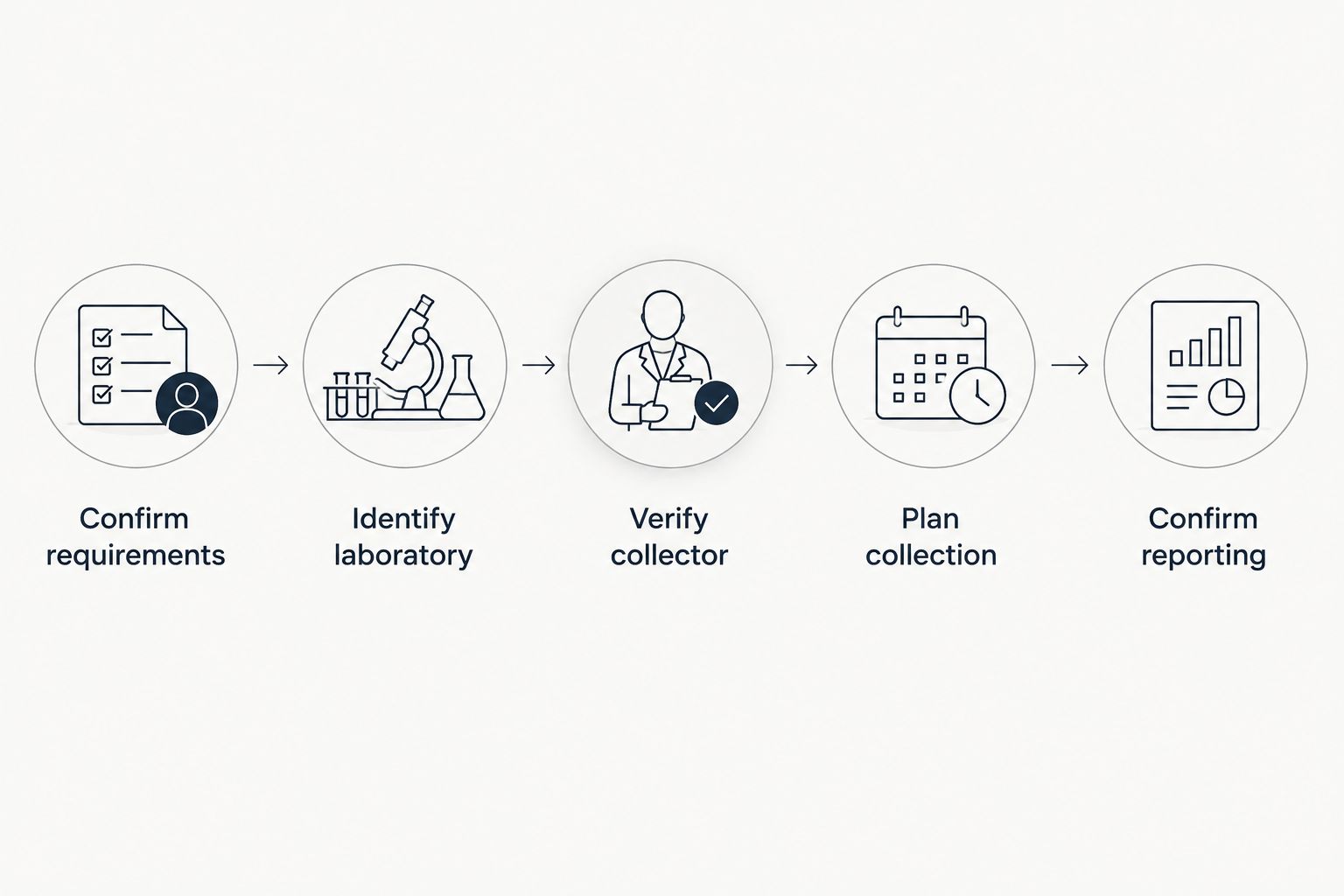
Use this sequence to choose the appointment. For legal DNA testing in 2026, the collection location comes after the procedural requirements—not before them.
- Confirm requirements: Read the court order and ask your attorney about the required laboratory, collection procedure, and report submission.
- Identify laboratory: Establish which laboratory will test the specimens and what qualifications the proceeding requires.
- Verify collector: Confirm that the assigned professional meets the laboratory’s requirements for this legal collection.
- Plan collection: Arrange participant identification, consent, location, and separate appointments where necessary.
- Confirm reporting: Establish who receives the report and how it must reach the proceeding.
Each step answers a different question. Keep the court’s requirements, the laboratory’s protocol, and the appointment details aligned rather than treating a booking confirmation as approval of the whole evidence process.
Keep the collection paperwork and report-delivery instructions together. Follow the collector’s instructions during the appointment; do not open sealed specimen packaging or alter completed custody records yourself.
A mobile collection marketplace helps you find a professional. It does not replace the laboratory’s protocol or a court’s authority to decide whether evidence is admissible.
Explore mobile DNA collection
Check the collection arrangement, laboratory protocol, and case requirements before booking.
How these workflows were ranked
The ranking prioritizes fit for a legal-evidence purpose, documented identity, custody procedures, and practical access. Witnessed home collection is the default for readers seeking home convenience without abandoning the required collection controls.
Court-directed collection takes priority whenever an order exists. Separate-location collection solves a different problem: coordinating participants who cannot attend together. Unsupervised collection ranks last because its defining feature leaves identity and collection without independent documentation.
This is a workflow comparison, not a laboratory performance ranking. It does not assign accuracy scores, promise admission in court, or treat a collector’s credentials as laboratory accreditation.
Which at-home DNA testing workflow should you choose?
Choose witnessed home collection when home access is your main need and the court accepts the proposed procedure. If an order already specifies the process, follow the court-directed workflow instead. If participants live apart, have the laboratory coordinate their collections under the same case.
Fieldflowlab offers a connection to credential-checked mobile professionals for DNA testing. Before using that connection for a legal matter, verify the laboratory, collector authorization, and chain-of-custody procedure for the specific appointment.
The best at-home DNA tests with court-admissible results in 2026 are selected by evidence requirements, not by the easiest kit to order. Home collection is a location choice; legal suitability depends on the documented process and the receiving court.
FAQ
What’s the best at-home DNA test for court use?
The best starting point is witnessed home collection under a legal-testing laboratory’s protocol, provided it meets the receiving court’s requirements. If a court order specifies a different procedure, follow that procedure instead.
Can I collect my own DNA sample and use it in court?
Do not rely on unsupervised self-collection for a planned court submission. It does not independently document participant identity or witnessed collection; confirm the required procedure before collecting samples.
Does a mobile DNA collector guarantee court-admissible results?
No, a mobile DNA collector does not guarantee admissibility. The collector must follow the required procedure, and the receiving court decides whether the evidence is admissible.
Can relatives in different states complete legal DNA testing?
Separate-location collection is a workflow for participants in different states. The laboratory must coordinate the case and specify the identity, consent, and custody requirements for each collection.
Is Fieldflowlab the laboratory that analyzes DNA samples?
Fieldflowlab is described as a marketplace connecting customers with credential-checked mobile professionals for DNA testing. Identify the testing laboratory separately and confirm its qualifications for your proceeding.
Will notarizing a DNA report make it court-admissible?
Notarization does not repair missing identity verification or chain-of-custody records. Follow any notarization requirement that applies to the documents, but keep that requirement separate from specimen collection.
What should I ask before booking a legal DNA collection at home?
Ask which laboratory will perform the testing, whether the collector meets that laboratory’s legal-collection requirements, and how custody is documented. Also confirm participant identification, consent, and report delivery.
One last thing
A notary stamp cannot recreate a collection event. If the specimen’s identity or handling was not documented when collection occurred, notarizing a statement afterward does not establish those missing facts.
Before anyone opens a collection kit, confirm that the appointment is designated for the required legal-testing procedure. That check belongs before specimen collection—not after you receive a report.
Related guides
These guides address separate document-service needs. Notary and apostille services do not replace a DNA laboratory’s legal-collection procedure.