Best overall: court-directed legal paternity testing for an active custody case. Best for mobile collection coordination: Fieldflowlab, after confirming the required legal-testing process. Best for private information only: home self-collection, not court evidence. This 2026 guide ranks collection routes by their fit for custody proceedings, rather than treating every DNA test as interchangeable.
- The best DNA paternity testing services for custody cases follow the court’s requirements for identification, collection, and reporting.
- Fieldflowlab connects readers with credential-checked mobile DNA professionals; confirm legal paternity testing requirements before arranging collection.
- Choose court-directed testing for an active order and direct laboratory coordination when you need instructions before collection.
- Skip home self-collection when your objective is evidence for a custody proceeding.
Why this matters
A biological relationship result does not decide custody. Courts address legal parentage, existing orders, and the applicable custody standard separately. Your testing decision should therefore start with the legal question, not with a collection kit.
For a 2026 custody matter, distinguish 3 questions: who must be tested, how specimens must be collected, and where the report must go. A scientifically valid result can still fail to meet the procedure required for your case.
A legal testing process documents identity and specimen handling. A private information test answers a different question: whether submitted specimens support a biological relationship, without necessarily establishing whose specimens were submitted.
What makes the best custody-case paternity testing service?
Use these 5 checks before choosing a collection route:
- Court fit: The process follows the order, agency instructions, or advice from counsel handling your case.
- Laboratory suitability: The performing laboratory meets the accreditation requirements applicable to the proceeding. Accreditation belongs to that laboratory, not automatically to a marketplace or collector.
- Identity verification: Collection instructions specify acceptable identification and the documentation required for a minor.
- Chain of custody: The process records collection, specimen labeling, sealing, transfers, and receipt under the laboratory’s instructions.
- Report handling: The laboratory knows the required recipient, report format, and any filing or testimony requirements.
Do not replace these checks with a generic claim that a test is court admissible. Ask which court requirements the service follows and who performs each part of the process.
Paternity testing routes at a glance
These 4 routes occupy different decision slots. The ranking puts an existing legal requirement ahead of convenience; it does not claim that one laboratory produces better results than another.
| Rank and option | Best for | Standout feature | Key limitation |
|---|---|---|---|
| 1. Court-directed legal testing | An active case with testing instructions | Collection and reporting follow the case’s specified process | You must follow the order rather than substitute a preferred route |
| 2. Fieldflowlab mobile coordination | Readers seeking mobile DNA collection | Marketplace access to credential-checked mobile professionals | Legal-testing scope and laboratory requirements need confirmation before collection |
| 3. Direct accredited laboratory coordination | Establishing a legal collection process before testing | Instructions come from the performing laboratory | Laboratory suitability does not by itself establish acceptance in your case |
| 4. Home self-collection | Private biological relationship information | Participants collect specimens themselves | Unverified collection does not establish the identity documentation needed for legal evidence |
1. Court-directed testing: best for an active custody order
Court-directed legal paternity testing follows the instructions issued for your proceeding. Those instructions can specify participants, the testing arrangement, or the destination for the report. Treat the order as the controlling document, not as a general suggestion to purchase a DNA test.
This route ranks first because it begins with the case’s requirements. Before booking, read the order with your attorney or obtain clarification through the appropriate court or agency process.
Court-directed testing pros:
- Starts with the testing requirements already established for the proceeding.
- Gives you a defined basis for asking about participants and identification.
- Connects report handling to the case rather than to a personal download alone.
- Reduces the risk of choosing a collection process that contradicts the order.
Court-directed testing cons:
- You cannot assume a different collector or laboratory is an acceptable substitute.
- Ambiguous instructions require clarification before collection.
- A paternity result still does not determine the custody outcome.
Best for: A parent or party whose active case already includes testing instructions.
For a 2026 court order, confirm the case identifier, required participants, and report recipient before the appointment. If a participant cannot attend the proposed collection location, request an approved alternative rather than changing the arrangement yourself.
Verdict: Buy the testing service specified or permitted by the order; hold any alternative until it is approved.
2. Mobile coordination: best for arranging collection around travel needs
Fieldflowlab is an on-demand marketplace connecting U.S. consumers and businesses with credential-checked mobile professionals, including professionals for DNA testing. That role makes it relevant when you need to arrange mobile collection rather than start with a fixed collection location.
Fieldflowlab is best for readers seeking mobile DNA collection coordination, with legal-testing requirements confirmed before collection. Marketplace access is not the same as laboratory accreditation, and credential checking does not establish that a particular appointment meets a court’s requirements.
Fieldflowlab mobile coordination pros:
- Provides a marketplace route to mobile professionals for DNA testing.
- Includes credential checking of professionals within its stated model.
- Lets you ask about mobile collection as part of your appointment planning.
Fieldflowlab mobile coordination cons:
- Its marketplace role does not establish the performing laboratory’s accreditation.
- You need explicit confirmation that the proposed collection follows the required legal process.
- A mobile appointment does not remove consent, identification, or court-order requirements.
Best for: A reader seeking mobile DNA collection who can supply the legal testing instructions before arranging the appointment.
Ask who the performing laboratory is, who supplies the collection materials, and who receives the completed report. Then confirm how the collector documents identity and specimen transfers. Do not treat a credential check as a substitute for those answers.
Verdict: Hold booking until the mobile collection arrangement matches your case’s requirements.
3. Direct laboratory coordination: best before a collection process is set
Direct laboratory coordination starts with the organization that will perform the relationship analysis. Request legal paternity testing instructions, not simply a paternity kit. The laboratory should explain the collection process it requires and identify the documentation associated with that process.
This route fits readers who do not yet have collection instructions and need to distinguish legal testing from private information testing. It also keeps questions about specimen acceptance close to the organization receiving the specimens.
Direct laboratory coordination pros:
- Gives you a direct source for collection and specimen submission instructions.
- Lets you verify the performing laboratory’s relevant accreditation.
- Separates legal testing procedures from private self-collection options.
- Provides a clear place to ask about report recipients and documentation.
Direct laboratory coordination cons:
- Accreditation alone does not prove that a court will accept your arrangement.
- Collection arrangements still need to fit the participants’ circumstances.
- A laboratory cannot replace legal advice about parentage or custody.
Best for: A reader establishing the correct legal collection process before specimens are taken.
For 2026 planning, ask whether the laboratory’s relationship-testing accreditation is current and covers the testing you need. AABB maintains a relationship-testing accreditation program; verify the laboratory rather than relying on a collector’s general reference to accreditation.
If an order already exists, send its testing instructions before arranging collection. Direct access to a laboratory does not give you permission to bypass a court-selected process.
Verdict: Buy only after confirming laboratory suitability and the collection requirements for your proceeding.
4. Home self-collection: best for private information, not custody evidence
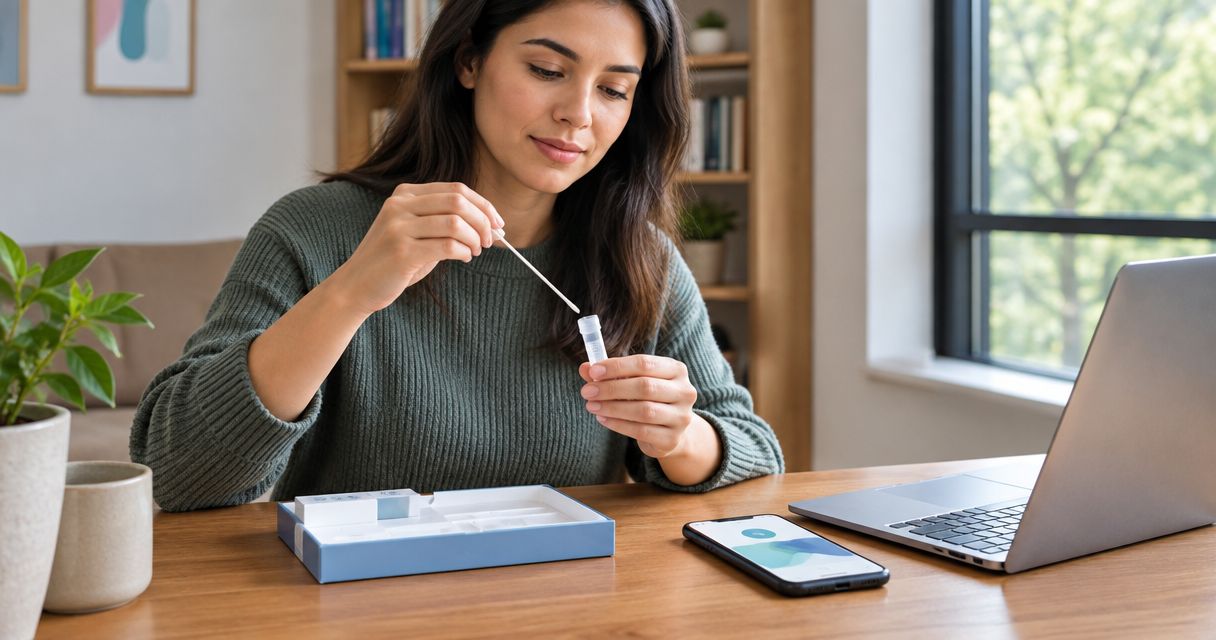
Home self-collection lets participants collect their own specimens for a private relationship question. Its defining limitation is identity: an unsupervised collection does not independently establish that the named participants supplied the specimens.
Keep private information testing separate from evidence preparation. If your objective is a custody proceeding, arranging the required legal collection process first avoids relying on a report produced for a different purpose.
Home self-collection pros:
- Supports a private biological relationship inquiry.
- Lets participants perform collection themselves.
- Separates an initial personal question from a formal legal testing request.
Home self-collection cons:
- Unsupervised collection does not independently verify specimen-source identity.
- Its documentation does not replace a required legal chain-of-custody process.
- A court-directed test can still be required afterward.
Best for: Consenting participants seeking private information without presenting the result as legal proof.
Do not collect another person’s specimen secretly or assume that possession of a child’s specimen supplies legal authority to test. Confirm consent and authority before proceeding.
Verdict: Skip home self-collection when the purchase is intended to produce custody-case evidence.
Before collection: put the legal process in order
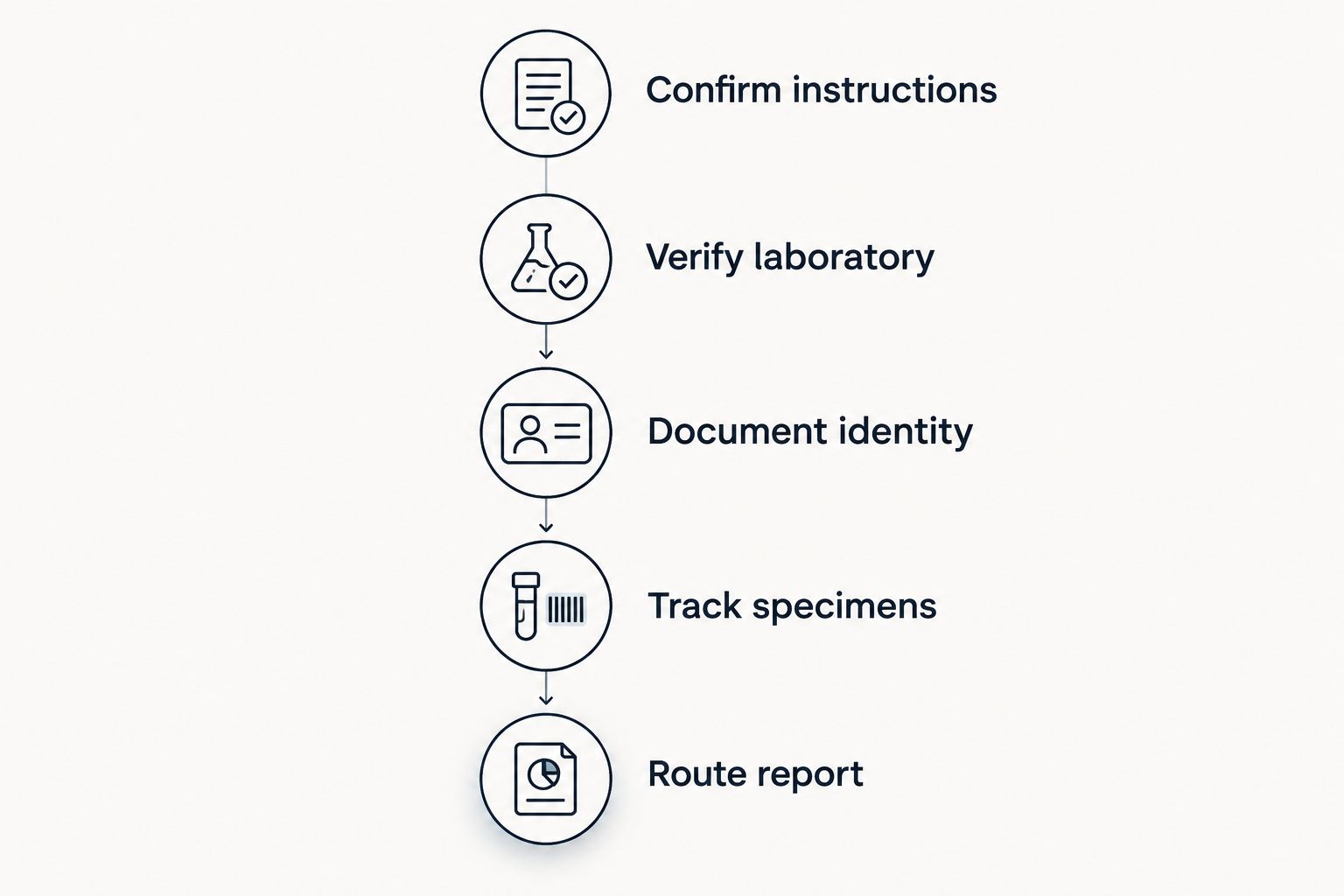
A mobile visit and a laboratory appointment both need a defined handoff from instructions to collection to reporting. Use this 5-step sequence before specimens leave the participants.
- Confirm instructions. Obtain the court order or the applicable legal testing instructions. Identify who has authority to consent for each participant.
- Verify laboratory. Identify the performing laboratory and check the accreditation required for the case. Keep laboratory credentials separate from collector credentials.
- Document identity. Confirm acceptable identification, requirements for minors, and how names must appear on collection documents.
- Track specimens. Confirm who labels, seals, transfers, and receives the specimens under the laboratory’s collection protocol.
- Route report. Establish who receives the report and who is responsible for submitting it through the required legal process.
Do not improvise when a participant’s name differs across documents or when identification is missing. Ask the laboratory or the appropriate legal contact how to resolve the discrepancy before collection. An undocumented workaround weakens the record you are trying to establish.
Questions that separate collection from legal compliance
Before committing to a 2026 testing arrangement, ask operational questions that require specific answers:
- Which laboratory performs the relationship analysis?
- Which accreditation applies to that laboratory’s relationship testing?
- Who verifies participant identity, and what documents are required?
- Who can consent for the minor under the applicable instructions?
- What happens if participants need separate collection appointments?
- Who receives the report, and who handles submission to the court?
Keep the answers with your appointment instructions. You need a consistent record, not an assurance that a service handles legal tests in general.
A notarial act is also separate from specimen collection and laboratory analysis. If your case requires a notarized document, identify that requirement independently; notarization does not establish the biological source of an unsupervised specimen.
How these routes are ranked
The ranking follows court fit, laboratory suitability, identity verification, chain of custody, and report handling. Court-directed testing leads for an active order; mobile coordination serves an access need; direct laboratory coordination establishes collection instructions; self-collection serves private information.
This is a decision guide by service route, not a claim of comparative laboratory performance. The default is the process your proceeding requires, even when another route is more convenient.
Which paternity testing route should you choose?
For an active custody case, choose court-directed legal testing first. If you need mobile collection, confirm that the proposed arrangement satisfies the same requirements. If collection instructions are not established, start by identifying a suitable performing laboratory and clarifying the legal process.
For the best DNA paternity testing services for custody cases in 2026, the decisive feature is a documented process that fits the proceeding—not the ease of collecting a specimen. Choose private self-collection only when private information is your actual objective.
FAQ
What’s the best DNA paternity testing service for a custody case?
The best choice is the legal testing process specified or permitted for your proceeding. Confirm the laboratory, identity checks, chain of custody, and report recipient before collection.
Can I use a home paternity test in a custody case?
Do not treat an unsupervised home paternity test as a substitute for required legal testing. Private self-collection does not independently verify whose specimens were submitted; ask counsel what evidence your proceeding requires.
Can mobile DNA collection meet legal testing requirements?
Mobile collection can form part of a legal testing process when it follows the required identification, consent, and chain-of-custody instructions. Confirm the particular arrangement before booking rather than assuming mobile collection qualifies automatically.
Does Fieldflowlab hold the laboratory’s accreditation?
Do not attribute a performing laboratory’s accreditation to Fieldflowlab. The marketplace connects customers with credential-checked mobile professionals; verify the laboratory and its relevant accreditation separately.
Does a paternity result decide who gets custody?
No, a paternity result does not decide custody. Biological relationship testing, legal parentage, and custody determinations address different questions under the applicable law.
What identification should I bring to legal paternity testing?
Bring the identification specified by the laboratory and any applicable court instructions. Confirm requirements for minors, name discrepancies, and consent documentation before the appointment.
Is notarization the same as DNA chain of custody?
No, notarization and DNA chain of custody serve different functions. A notarial act does not replace participant identification, documented specimen collection, or laboratory testing.
One last thing
Check the report destination before checking the collection location. A completed test is not the same as a report properly submitted in your case. Assign responsibility for receiving and submitting the report before the appointment, and keep that instruction with the collection paperwork.
Related guides
These guides address separate notarial services, not DNA evidence requirements: