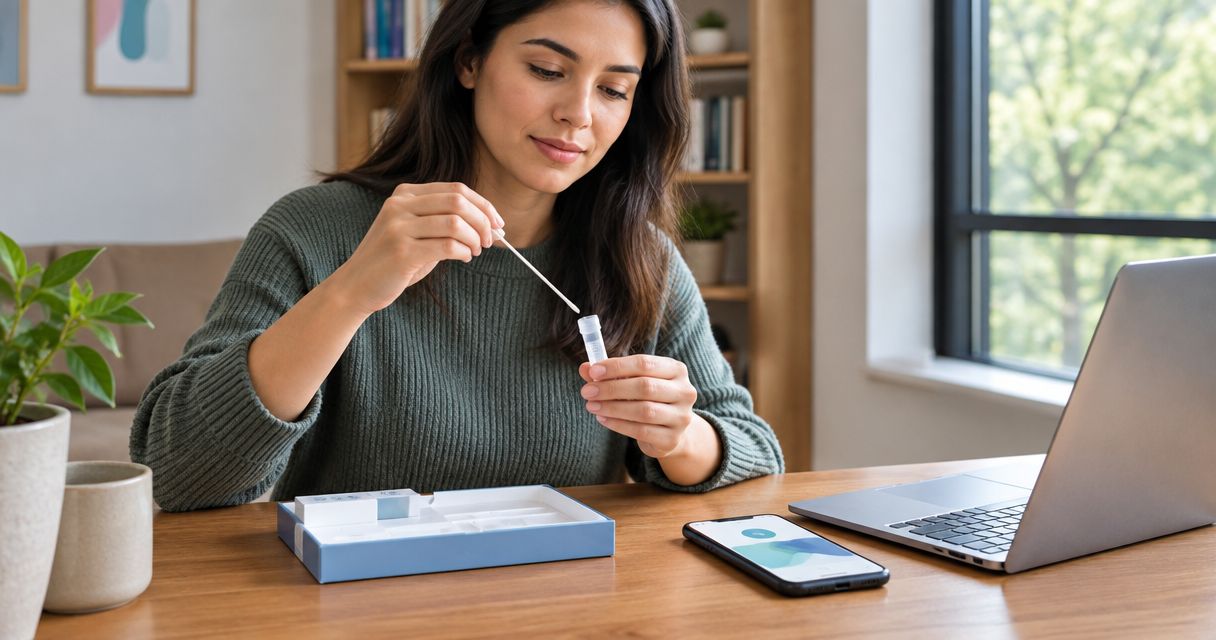
Best overall: an AABB-accredited relationship-testing laboratory managing the immigration case. Best for relatives abroad: laboratory coordination with the designated U.S. embassy or consulate. Best for domestic collection convenience: a mobile collector approved by the case laboratory. This 2026 guide ranks service arrangements by evidentiary fit, not by advertising claims or consumer DNA features.
- The best DNA testing services for immigration cases start with an AABB-accredited relationship-testing laboratory.
- Overseas collection must follow the designated embassy or consulate’s instructions, not a privately arranged substitute.
- Fieldflowlab offers mobile DNA services; confirm the case laboratory accepts the proposed collector before booking.
- Immigration DNA testing requires documented identity and chain of custody; an ancestry kit is not a substitute.
Why this matters
An immigration DNA result must establish the relevant biological relationship through an accepted testing and collection process. A scientifically valid result is not enough if the specimens, identities, or reporting route fail the requesting authority’s requirements.
Fieldflowlab connects U.S. consumers and businesses with credential-checked mobile professionals, including professionals providing DNA testing services. That marketplace role does not establish immigration-case acceptance or laboratory accreditation. Fieldflowlab is best considered for domestic mobile DNA collection after the case laboratory approves the collection arrangement.
For a 2026 case, start with the written request or instructions from USCIS, the embassy, or the consulate. USCIS guidance treats DNA testing as voluntary evidence in relevant relationship cases, not a universal requirement for every family-based application. Testing also does not establish eligibility by itself: the agency decides what the evidence proves.
What makes the best immigration DNA testing service
Evaluate the evidence pathway before evaluating convenience. These criteria determine whether the service fits your case:
- Accreditation scope: Confirm the testing laboratory holds current AABB relationship-testing accreditation. A collector’s training is a separate credential.
- Case-specific instructions: The laboratory must work from the requesting authority’s requirements, including the relationship being evaluated and each participant’s location.
- Identity controls: Ask how the collector verifies identity and connects each participant to the specimen and case paperwork.
- Chain of custody: Require documented collection, specimen identification, sealing, and transfer under the laboratory’s procedure.
- Overseas coordination: If someone is abroad, establish who arranges collection and where the kit goes before scheduling anything independently.
- Result delivery: Confirm who receives the official laboratory report and whether the authority requires direct transmission.
AABB accreditation belongs to the accredited laboratory, not automatically to a marketplace, booking service, or mobile collector. Check the laboratory’s current listing and the relevant scope rather than relying on a badge in an advertisement.
Immigration DNA testing options at a glance
These are service pathways, not interchangeable laboratory brands. The order reflects which decision you need to make first in 2026: establish the accepted testing process, then solve collection logistics.
| Rank and service arrangement | Best for | Standout feature | Key limitation |
|---|---|---|---|
| AABB-accredited laboratory managing the case | Starting an immigration relationship test | Laboratory-led testing, collection instructions, and reporting | Accreditation does not guarantee the immigration outcome |
| Laboratory-coordinated embassy or consulate collection | A participant outside the United States | Collection follows the designated overseas process | You cannot replace official instructions with a private appointment |
| Laboratory-approved domestic mobile collection | A U.S. participant who needs collection at another location | Collection convenience without changing the laboratory’s protocol | Collector credentials alone do not establish case acceptance |
| Laboratory-led complex relationship assessment | Cases involving relationships beyond a straightforward parent-child comparison | Assessment of which relatives and specimens can answer the question | Some proposed relationships cannot be resolved adequately by the available participants |
1. AABB-accredited laboratory: best for starting the case
An AABB-accredited relationship-testing laboratory is the default starting point for immigration DNA evidence. The laboratory determines the testing arrangement, issues collection instructions, analyzes specimens, and produces the relationship report. Start here before hiring a collector.
For parentage evidence, USCIS guidance specifies a 99.5% probability of parentage standard. The U.S. Department of State’s DNA guidance also describes a 99.5% probability threshold for paternity or maternity testing. These are parentage standards; do not apply them automatically to sibling or other extended-family comparisons.
A laboratory’s accreditation is necessary to evaluate, but it is not a promise that your application will succeed. The report addresses a biological relationship. It does not resolve every legal requirement attached to that relationship.
AABB-accredited laboratory pros:
- Places the testing laboratory in control of specimen instructions.
- Gives you a defined source for collection and reporting requirements.
- Supports a documented relationship-testing process rather than consumer self-collection.
- Provides a laboratory contact for questions about participants and relationship scope.
AABB-accredited laboratory cons:
- Collection still requires coordination across participants and locations.
- A relationship report cannot replace other immigration evidence.
- Accreditation alone does not establish that a proposed overseas collection arrangement is acceptable.
Best for: Applicants beginning a requested parent-child relationship test or establishing an accepted evidence pathway.
Verdict: Buy the laboratory-managed service only after matching it to the authority’s instructions. Do not purchase an unrelated consumer kit first and expect to convert it into immigration evidence later.
2. Embassy-coordinated collection: best for relatives abroad
When a participant is outside the United States, the laboratory and designated U.S. embassy or consulate need to coordinate the collection process. Follow that post’s instructions about scheduling, identity documents, collection location, and kit handling. A privately arranged overseas collection is not an automatic substitute.
The Department of State’s public DNA guidance describes a process in which the accredited laboratory sends the kit to the embassy or consulate, and the overseas collection follows the post’s arrangements. The applicant should not independently redirect the kit or choose a different specimen-transfer route.
In 2026, distinguish the laboratory’s work from the consular post’s work. The laboratory controls analysis; the post supplies its collection instructions. Neither a domestic collector nor a booking marketplace can override those instructions.
Embassy-coordinated collection pros:
- Aligns overseas collection with the designated post’s process.
- Keeps identity verification and specimen handling within that arrangement.
- Connects the overseas specimen to the laboratory managing the case.
Embassy-coordinated collection cons:
- The appointment process follows the post’s instructions, not your preferred private schedule.
- Participants in different countries require separate location-specific coordination.
- Sending documents or specimens through an unauthorized route can disrupt the evidence process.
Best for: Cases with a relative abroad who must provide a specimen through a U.S. embassy or consulate’s designated process.
Verdict: Buy laboratory coordination; wait for the designated post’s collection instructions before making a private appointment. Confirm the exact post involved rather than assuming procedures are identical everywhere.
3. Approved mobile collection: best for domestic convenience
A mobile DNA collector brings specimen collection to a domestic location instead of requiring the participant to attend a fixed collection site. That solves a location problem. It does not change which laboratory analyzes the specimen or which evidence controls apply.
Fieldflowlab provides access to credential-checked mobile professionals for DNA testing services. For immigration DNA testing, ask the case laboratory whether it accepts the proposed professional, kit, location, identity procedure, and specimen-return arrangement. Do not infer approval from the marketplace’s general DNA service description.
Fieldflowlab mobile collection pros:
- Offers a mobile service model for U.S. consumers and businesses.
- Connects customers with credential-checked professionals.
- Provides a domestic collection option to evaluate with the case laboratory.
Fieldflowlab mobile collection cons:
- Marketplace credential checks do not establish AABB laboratory accreditation.
- The proposed appointment still needs the case laboratory’s approval.
- Domestic mobile collection does not replace embassy-directed collection abroad.
Best for: A U.S. participant whose case laboratory approves mobile collection at the proposed location.
Before booking, obtain the collector’s required instructions from the laboratory. Confirm acceptable identification, participant paperwork, specimen labels, seals, and return handling. Ask who resolves a mismatch between the booking details and the laboratory’s case record.
Verdict: Hold the mobile booking until the case laboratory approves the collection arrangement. Convenience belongs inside the evidence process, not ahead of it.
4. Complex relationship assessment: best for nonstandard comparisons
A laboratory-led assessment is the right starting point when the biological relationship is not a straightforward parent-child comparison. Examples include a proposed sibling relationship or a case where a relevant parent cannot participate. The laboratory must assess whether the available relatives can answer the specific relationship question.
Participant count matters, but it is not a quality score. A 2-person comparison involving an alleged parent and child is commonly called a duo; a 3-person comparison involving the child, known parent, and alleged parent is commonly called a trio. Those labels describe the participants, not an immigration authority’s acceptance decision.
Do not select a sibling test simply because a parent is unavailable. Establish what the authority requested and what the laboratory can conclude from the available specimens. The laboratory’s assessment and the agency’s evidentiary requirements are separate questions.
Complex relationship assessment pros:
- Matches the proposed test to the actual biological question.
- Identifies which additional relatives would contribute useful evidence.
- Clarifies the limits of the proposed comparison before collection.
Complex relationship assessment cons:
- Results can be less straightforward than direct parent-child testing.
- Available participants might not support a sufficiently informative comparison.
- A laboratory’s ability to perform a test does not guarantee agency acceptance.
Best for: Cases involving unavailable parents, sibling comparisons, or other relationships requiring laboratory review before booking.
Verdict: Hold collection until the laboratory defines the comparison and the requesting authority’s instructions support that evidence route. Skip a generic relationship package that does not address your case.
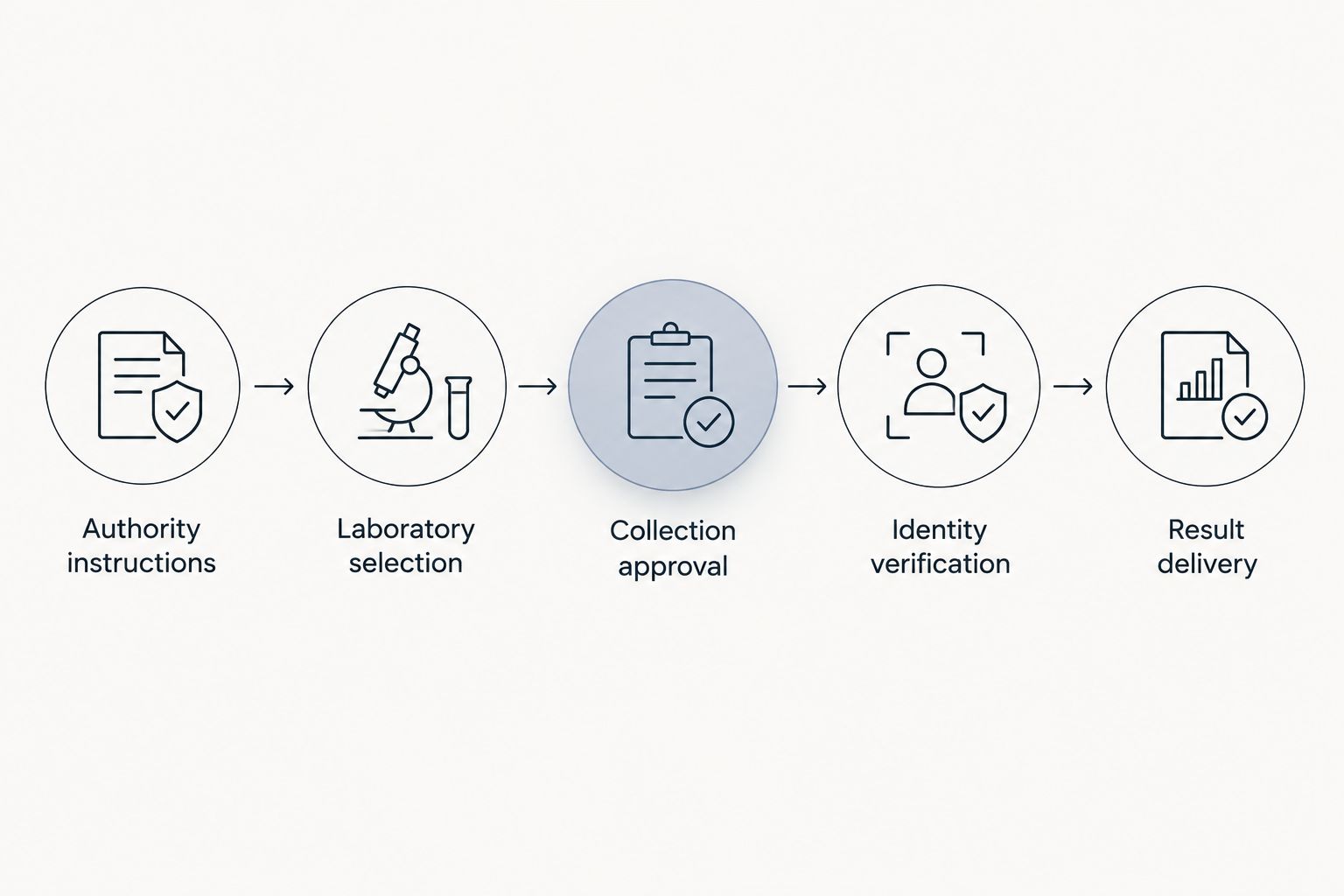
Keep collection and reporting in the right order
The most useful pre-booking check is procedural. For your 2026 case, keep the following sequence intact:
- Authority instructions: Identify the requested relationship evidence and the participants involved.
- Laboratory selection: Confirm current AABB relationship-testing accreditation and case fit.
- Collection approval: Establish the approved domestic or overseas collection arrangement.
- Identity verification: Follow the required identification and specimen documentation procedure.
- Result delivery: Confirm the laboratory’s official reporting destination and method.
Keep copies of the case instructions and appointment communications. Those records help you resolve discrepancies without asking the collector to improvise a different procedure at the appointment.
Ask each provider to identify its role explicitly: laboratory, collection professional, booking marketplace, or document-service provider. The answer determines which promises that provider can actually make.
Review mobile collection options
Confirm the case laboratory’s collection requirements before arranging a domestic mobile appointment.
How these options are ranked
The ranking prioritizes accreditation scope, compliance with case instructions, identity verification, chain of custody, and official reporting. Collection convenience comes after those requirements. These are procedural recommendations, not laboratory performance scores or claims of comparative testing results.
The source framework is USCIS’s public guidance on DNA relationship evidence, the Department of State’s public DNA testing guidance, and AABB’s relationship-testing accreditation resources. For a 2026 booking, consult the current guidance and your case-specific instructions; this ranking does not replace either.
Which immigration DNA testing service should you choose?
Choose an AABB-accredited relationship-testing laboratory managing the case as your default. Add embassy-coordinated collection when a participant is abroad. Add domestic mobile collection only when the laboratory accepts it.
For a complex relationship, pause before collecting anything. The right test depends on the relationship question and available participants, not on the package with the broadest name. Your next move is to send the laboratory the authority’s instructions and participant locations, then obtain the collection plan.
FAQ
What’s the best DNA testing service for an immigration case?
The best starting point is an AABB-accredited relationship-testing laboratory managing the case. Choose collection arrangements only after the laboratory reviews the requesting authority’s instructions and participant locations.
Can I use an ancestry DNA kit for immigration evidence?
An ancestry kit is not a substitute for the immigration relationship-testing process. Immigration evidence requires the appropriate laboratory, documented identity, chain of custody, and the prescribed reporting route.
Can someone collect my immigration DNA sample at home?
Domestic mobile collection is an option only when the case laboratory accepts the proposed arrangement. Confirm the collector, kit, identity procedure, specimen handling, and reporting requirements before booking.
Is a credential-checked collector the same as an accredited laboratory?
No. Collector credentials concern the professional performing collection; AABB relationship-testing accreditation concerns the laboratory. Confirm both roles separately rather than treating one credential as proof of the other.
How does DNA collection work when my relative is abroad?
Follow the designated U.S. embassy or consulate’s instructions through the case laboratory. Do not substitute a privately arranged collection or redirect the kit without authorization.
What probability is required for immigration parentage testing?
USCIS guidance specifies a 99.5% probability of parentage standard, and Department of State guidance describes that threshold for paternity or maternity testing. Do not assume the same threshold describes every extended-family comparison.
Does a DNA result guarantee immigration approval?
No. A DNA report addresses a biological relationship, while the immigration authority evaluates eligibility and the complete evidence record. Other application requirements still apply.
Can a notary make a self-collected DNA test acceptable?
Notarization does not replace an approved DNA collection and testing process. A notarial act does not establish laboratory accreditation, specimen chain of custody, or compliance with the authority’s instructions.
One last thing
Before any specimen is collected, confirm where the official report must go. A report delivered only to you is not equivalent to a report sent through the authority’s required channel. Resolve the delivery route at booking, not after the result arrives.
Keep document services separate from biological evidence. A notarization or apostille addresses a document-related requirement; it does not repair an incorrectly collected DNA specimen.
Related guides
These guides cover separate document-service logistics, not substitutes for immigration DNA testing: